Leading a student design team to create the identity for a department-wide event
draft
Texas State University Art & Design Department
Duration
1.5 months
My Role
Concept Development
Design
UX Research
Dev Handoff
Teammates
Director of Design
Executive Leadership
Staff Engineer
Front end developer
Background
Continuing a new design tradition in the department
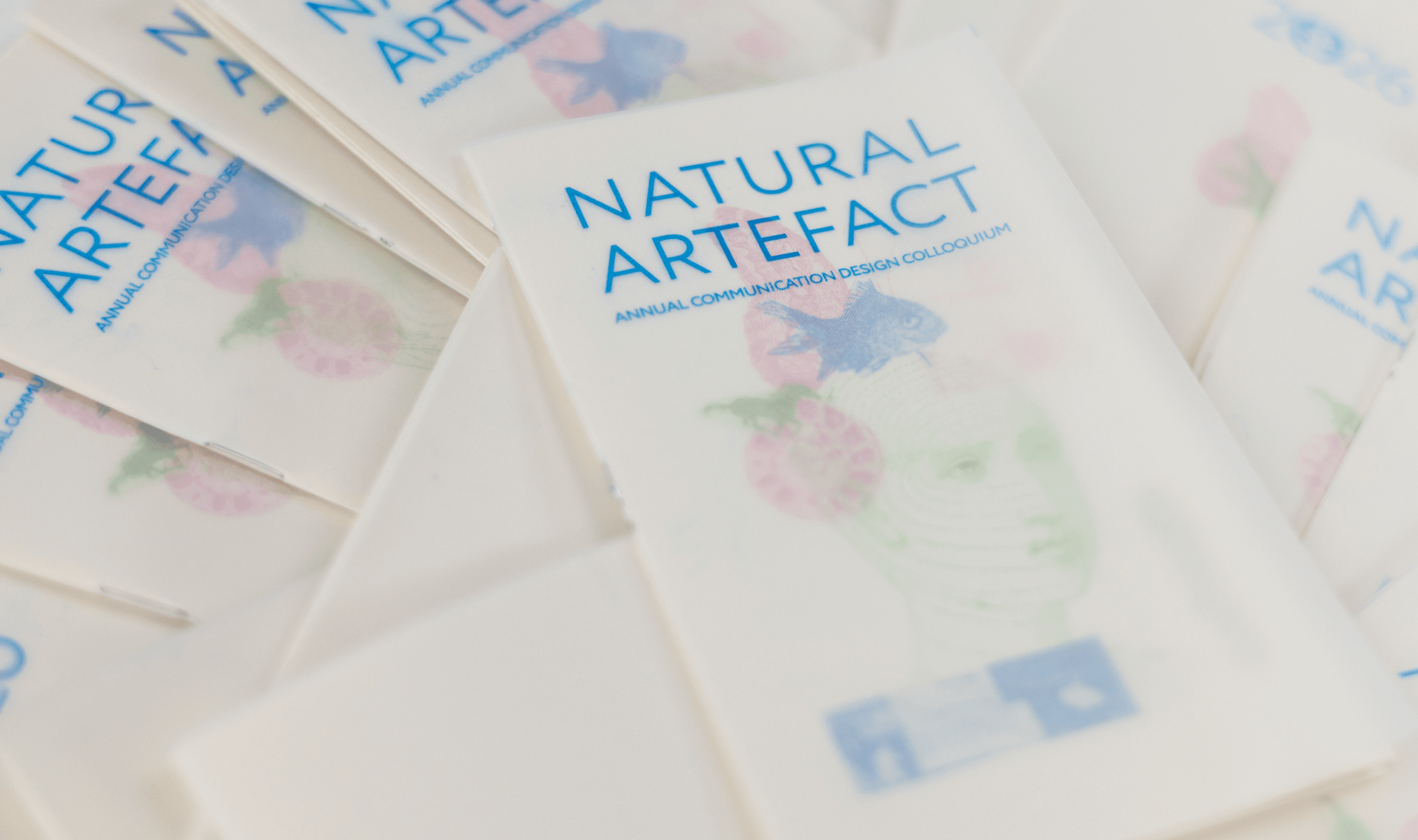
The Communication Design Colloquium is an annual event at Texas State that brings working designers to campus for a day of talks and workshops. It gives students the chance to hear from professionals, participate in hands-on sessions, and engage with design outside the classroom.
In 2025 I helped design the event materials alongside another Design Guild member. The experience was rewarding and showed how design could shape the energy of the event.
In 2026 we were invited back to create the branding again. This time, we expanded the effort into a collaborative project that invited more student designers to participate.
The Challenge
Create a cohesive brand while coordinating a student team
Our goal was to develop a cohesive identity for the colloquium while managing a small team of student designers with varying skill sets.
Unlike a typical class project, this was a self-directed process. Much of my role focused on organizing the team and guiding the work toward finished deliverables.
Our Goal:
Produce a cohesive event identity while creating a structured and collaborative design process.
The Solution:
Focusing on these issues, I created GreenLens, an app paired with meta glasses that alerts users to dangerous flora around them, while also educating them about the plants properties.
Jump to Solution
Organizing the Team
Building structure for a collaborative project
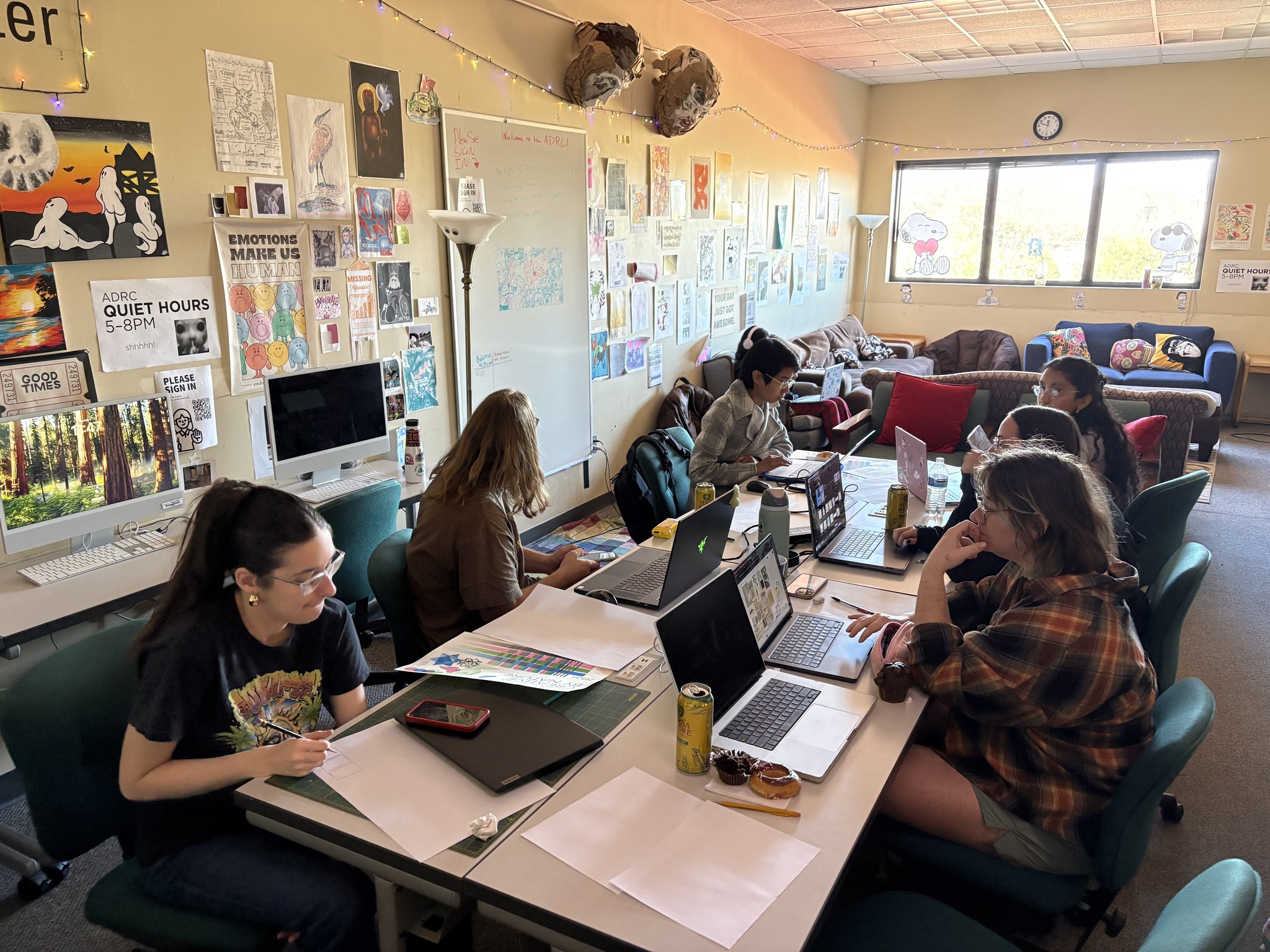
I recruited and organized a team of eight student designers. Because everyone had different schedules, I set up a recurring four-hour work session each weekend for the next month so we could make steady progress together.
I worked with the colloquium’s faculty producer to define deliverables and priorities. Posters and attendee notebooks were identified as essential, while social media graphics and giveaways were secondary if time allowed.
Facilitating collaborative concept development
The faculty producer provided a short brand brief outlining the 2026 colloquium theme and focus: Creativity and ingenuity as central parts of being human and essential to the design process.
I organized a brainstorming workshop where the team created moodboards and quick pitch decks exploring three potential visual directions for the theme.
Design Production
Coordinating work across contributors
Once the concept was defined, I organized the work across the team based on interests and strengths.
Some designers explored typography and selected fonts that emulate the museum-inspired tone while providing strong readability. Designers specializing in illustration created hand-drawn motifs that added a human-made quality and reinforced our theme of creativity. A third group of designers sourced from public domain scientific imagery that fit the archival theme.
Through this process I learned to delegate work intentionally and create opportunities for each designer to shape the outcome.
Design Production
Initial Concept: An Expanding Icon Side Navigation
asdfasdf
Design Production
Our collaboration process slowed down
As the team began producing assets, we began to experience workflow bottlenecks.
We were working with multiple files and programs, and collaboration became fragmented, partly because designers varied in their knowledge and comfort level with the tools and partly because our tools did not support real-time collaboration. When only one person could work on a file at a time, our hand-offs got out of control and messy!
It felt like we were all working on our own mini ideas instead of contributing to the greater project.
Design Ops Solution
Adobe Express to the Rescue!
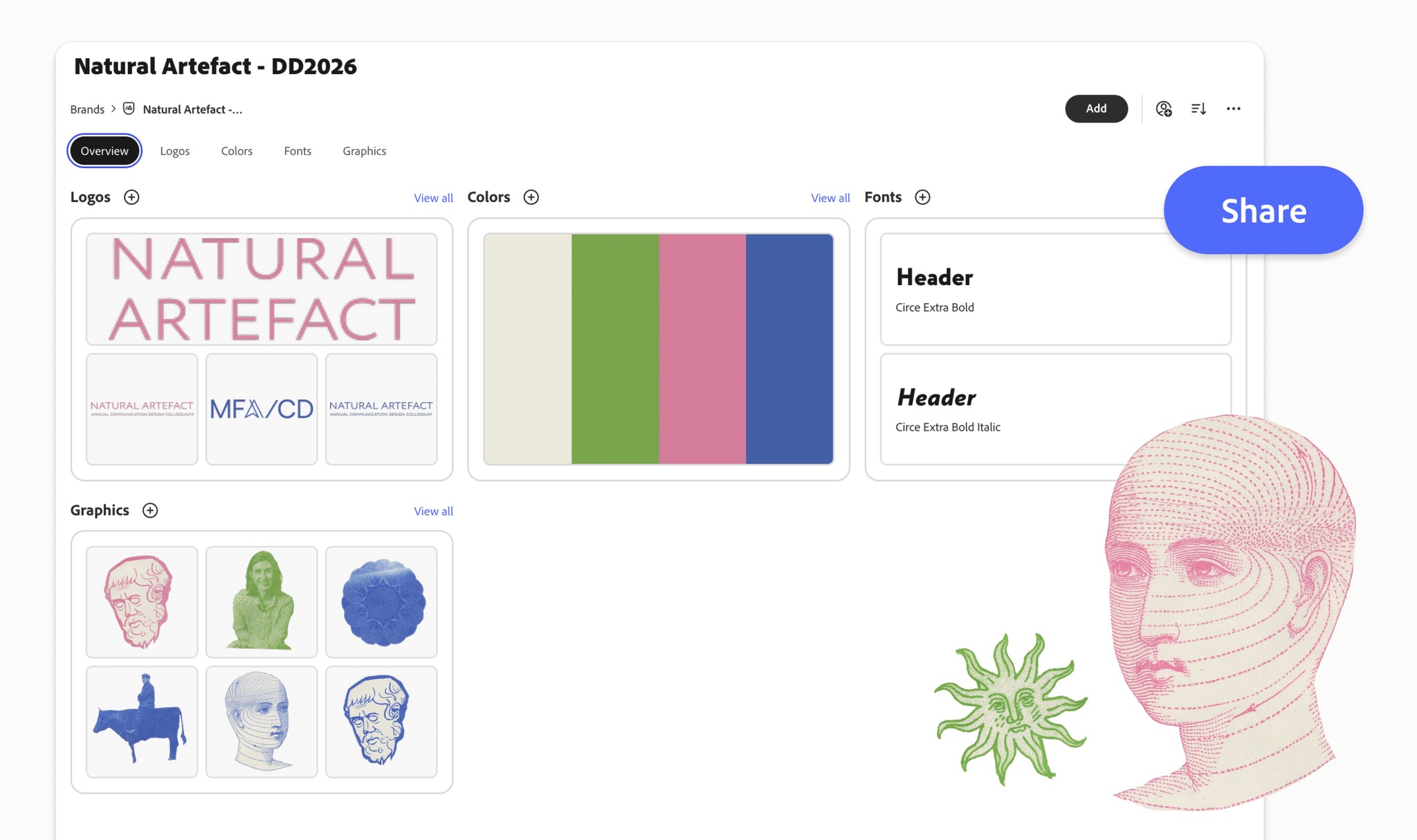
To address this problem, I introduced Adobe Express to our workflow and created shared brand guidelines with reusable assets, which allowed designers to quickly experiment and create variations while staying within the visual system.
Importantly, Adobe Express enabled real-time collaboration. Designers could work in the same file, build on each other’s ideas, and iterate asynchronously. No more messy hand-offs! Another bonus: our faculty advisor could always access the latest file asynchronously in order to review and provide feedback.