Leading the Creation of a Brand Identity
Designing and producing a cohesive event identity with a collaborative student team
Understanding the Event
Continuing a New Design Tradition in the Department
The Communication Design Colloquium is an annual event at Texas State that brings working designers to campus for a day of talks and workshops. It gives students the chance to hear from professionals, participate in hands-on sessions, and engage with design outside the classroom.
In 2025 I helped design the event materials alongside another Design Guild member. The experience was rewarding and showed how design could shape the energy of the event.
In 2026 we were invited back to create the branding again. This time, we expanded the effort into a collaborative project that invited more student designers to participate.
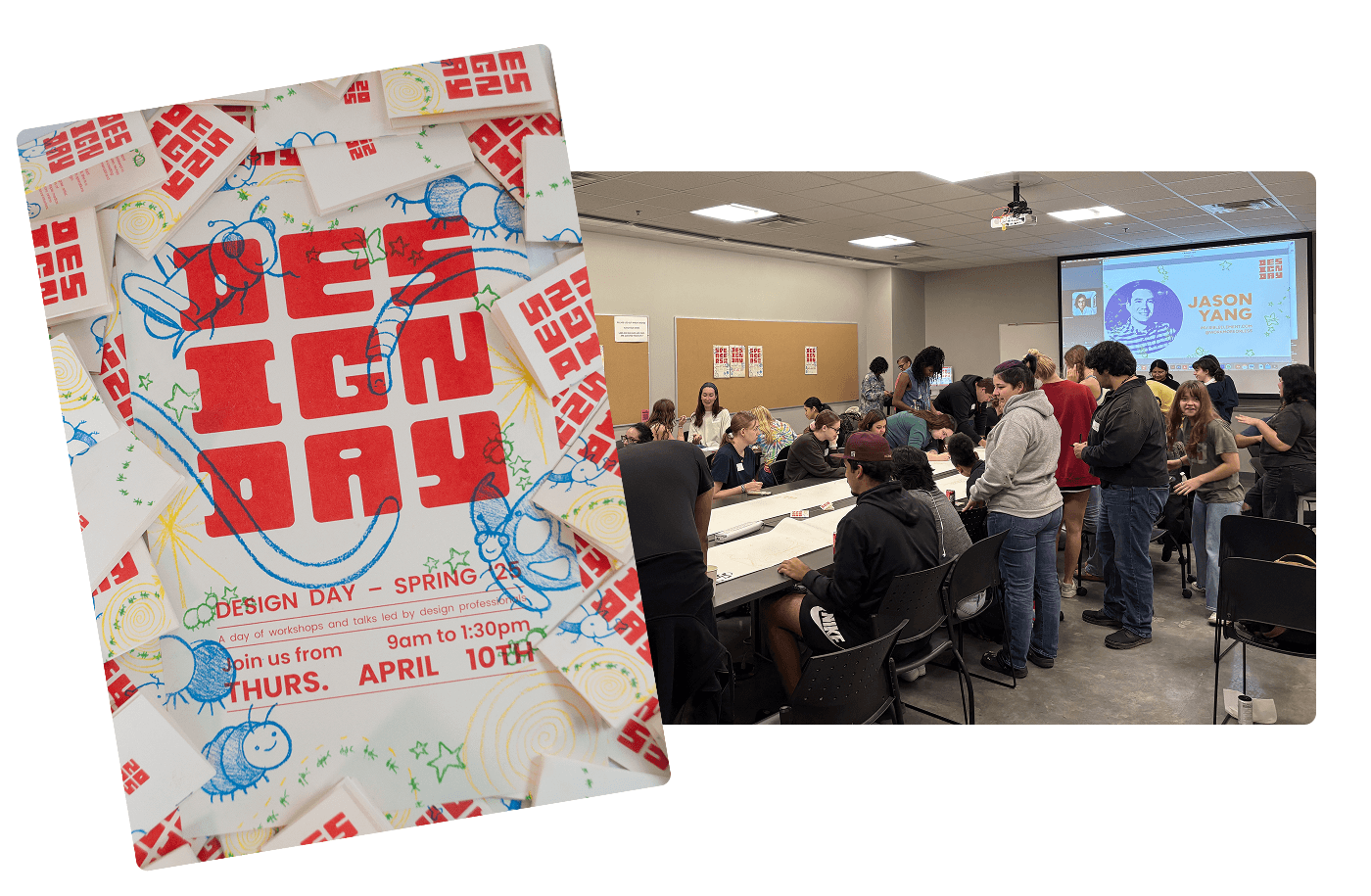
2025 Design Colloquium
The Challenge
Create a Cohesive Brand While Coordinating a Student Team
Our goal was to develop a cohesive identity for the colloquium while managing a small team of student designers with varying skill sets.
Unlike a typical class project, this was a self-directed process. Much of my role focused on organizing the team and guiding the work toward finished deliverables.
Our Goal
Produce a cohesive event identity while creating a structured and collaborative design process.
Organizing the Effort
The project brought together student designers contributing across typography, illustration, motion, and print production.
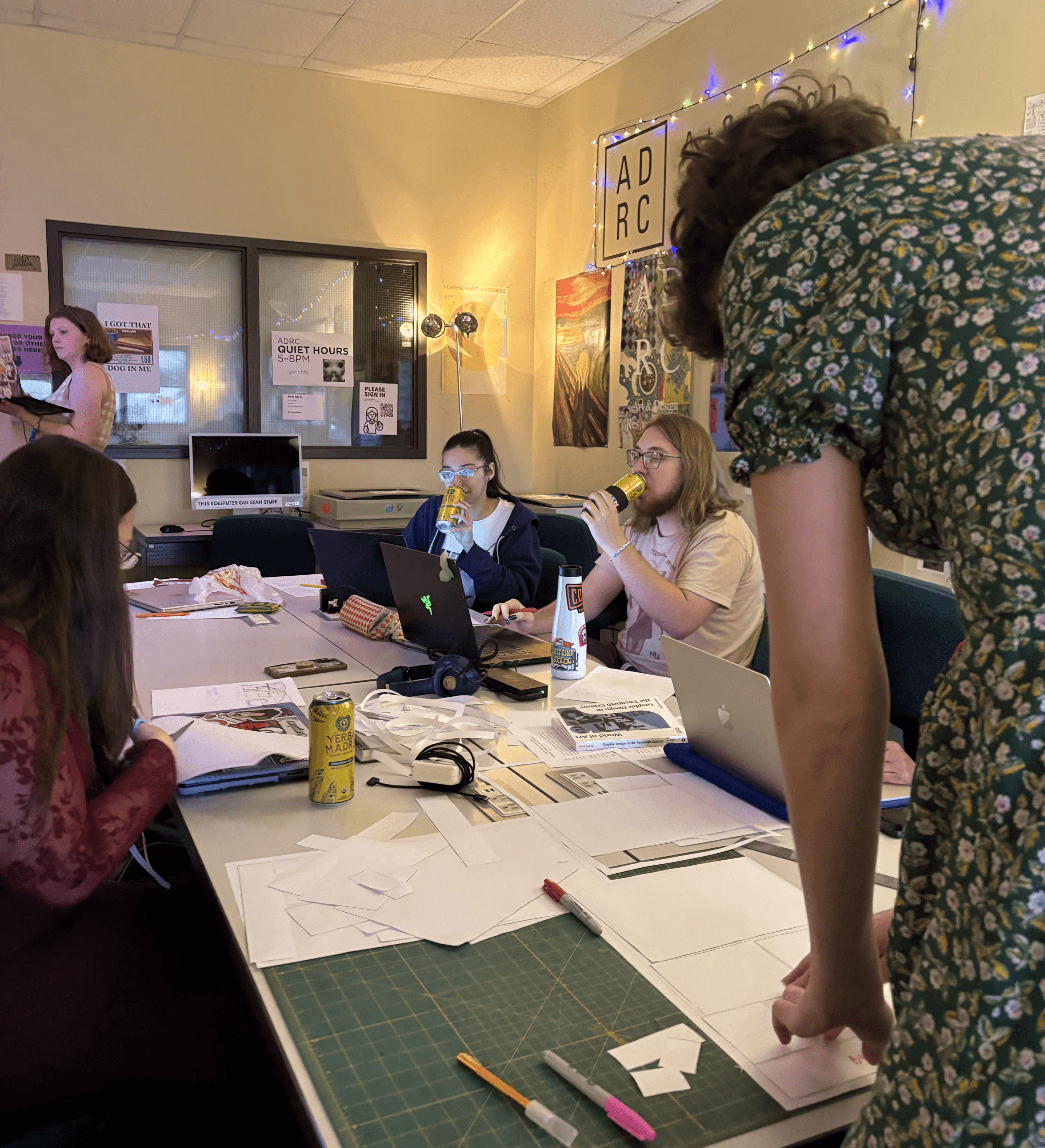
Meet the Team
Recruitment & Defining Deliverables
Building Structure for a Collaborative Project
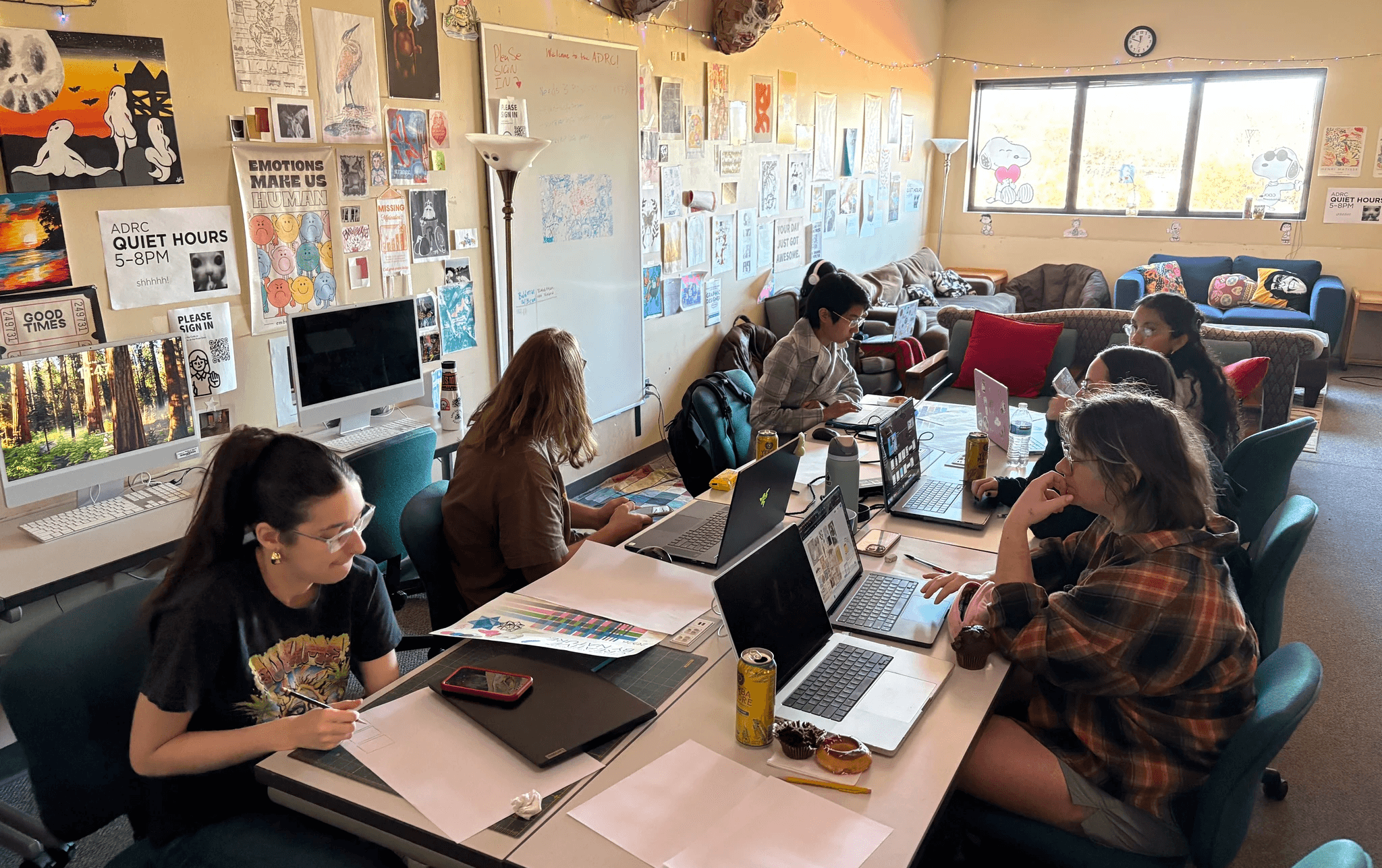
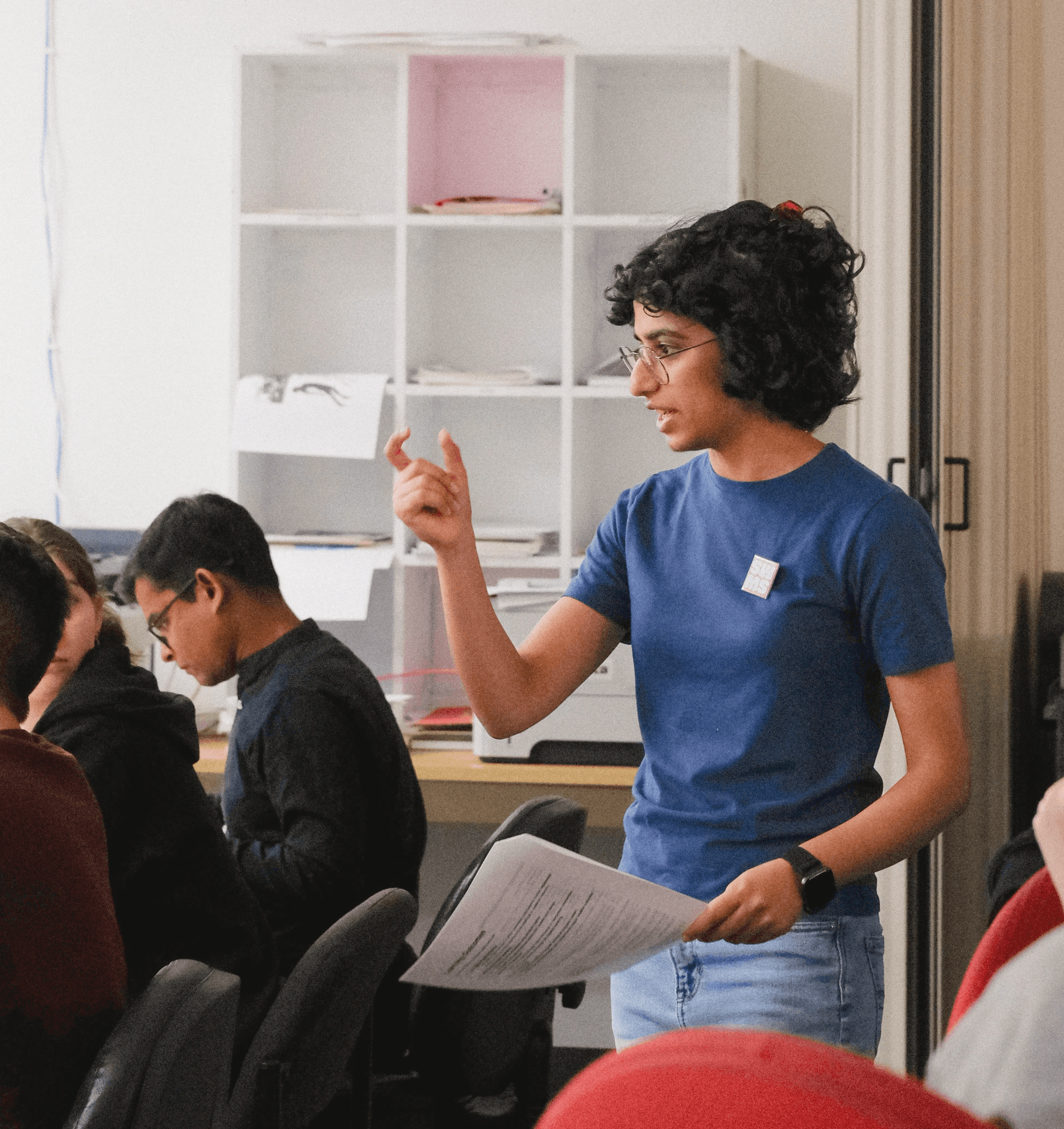
I recruited and organized a core team of six student designers to help create assets for the event. Because everyone had different schedules, I facilitated and led a series of weekly four-hour work sessions over the course of the month so we could make steady progress together.
I worked with the colloquium’s faculty producer to define deliverables and priorities. Posters and attendee notebooks were identified as essential, while social media graphics and giveaways were secondary if time allowed.
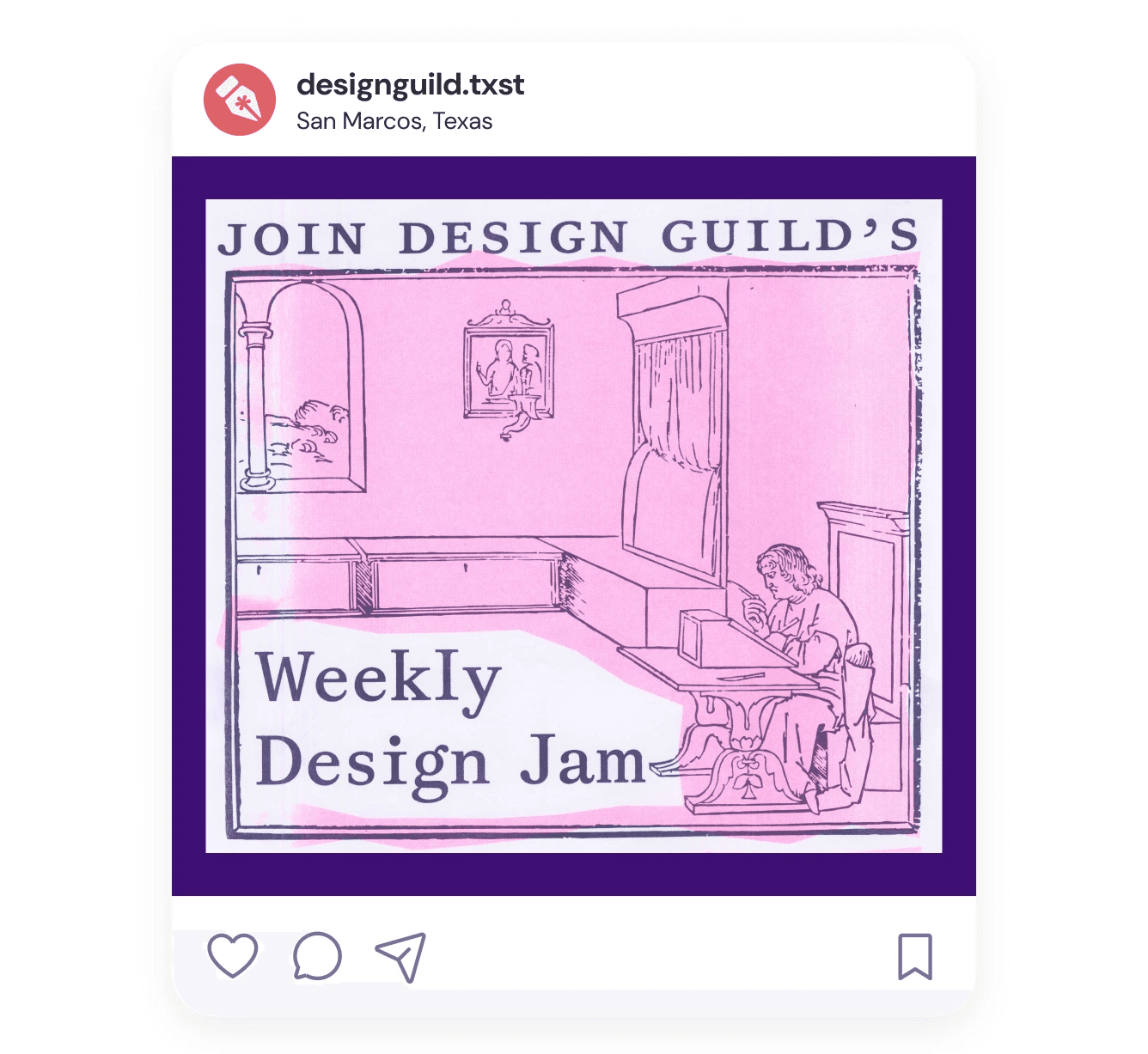
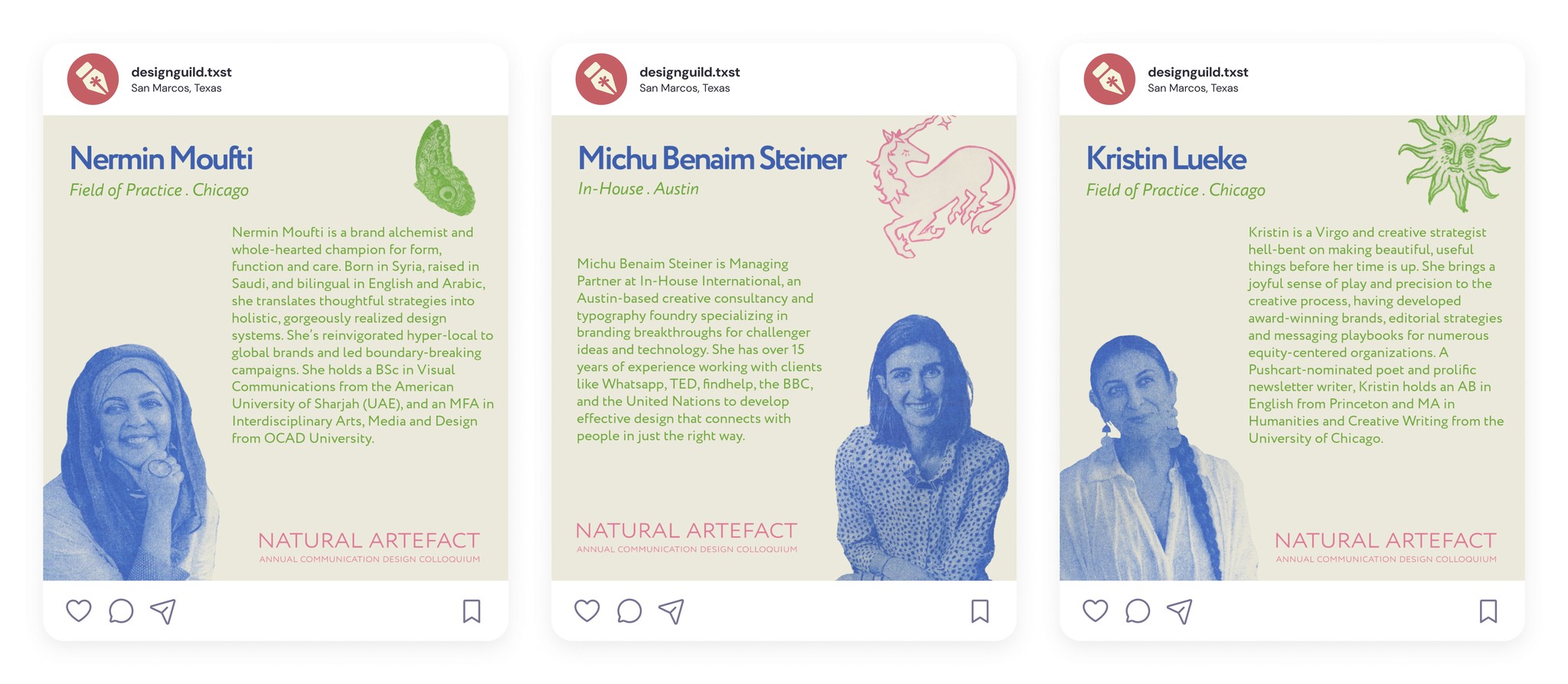
Getting the word out on Instagram
Exploring Ideas
Facilitating Collaborative Concept Development
The faculty producer provided a short brand brief outlining the 2026 colloquium theme and focus: Creativity and ingenuity as central parts of being human and essential to the design process.
I organized a brainstorming workshop where the team created moodboards and quick pitch decks exploring three potential visual directions for the theme.
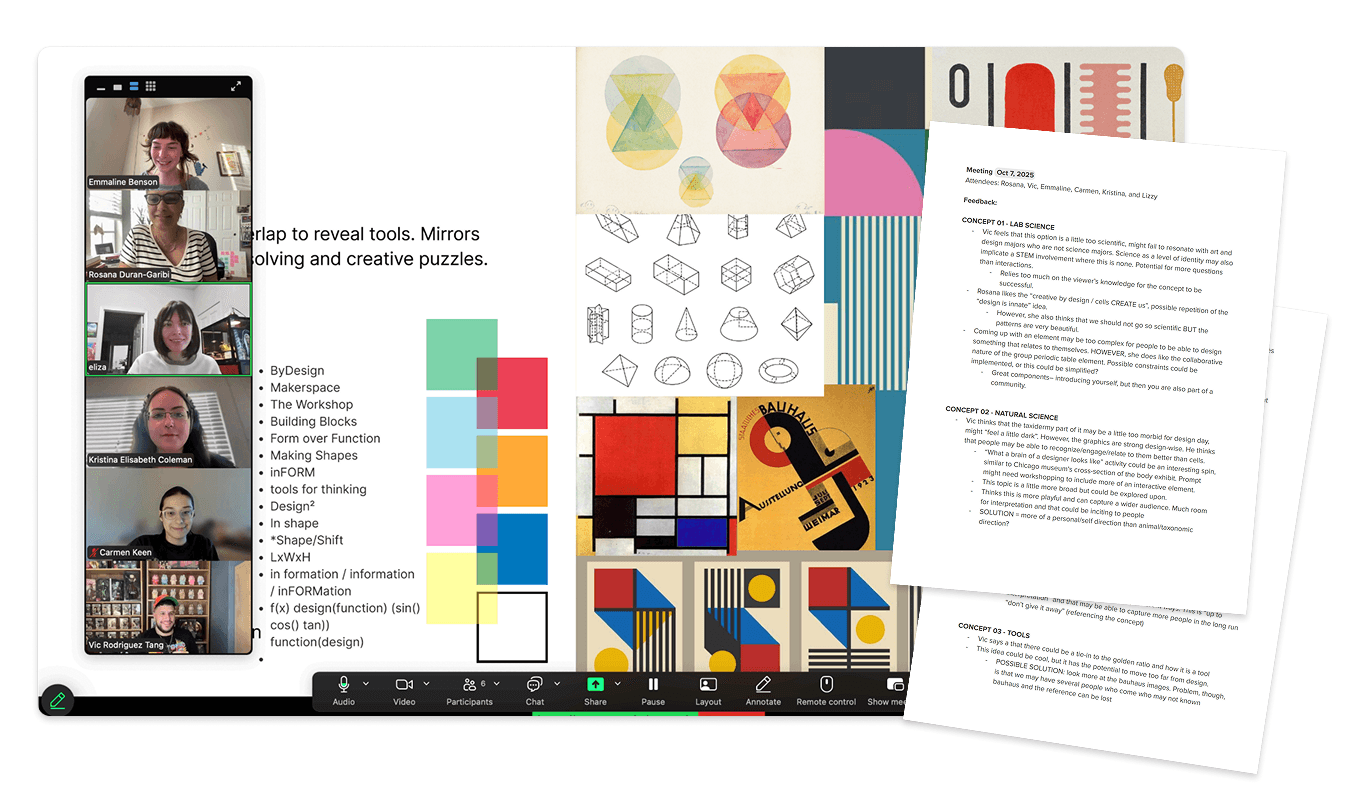
Presenting pitch decks to faculty
Beginning to Design
Coordinating Work Across Contributors
Once the concept was defined, I organized the work across the team based on interests and strengths.
Some designers explored typography and selected fonts that emulate the museum-inspired tone while providing strong readability. Designers specializing in illustration created hand-drawn motifs that added a human-made quality and reinforced our theme of creativity. A third group of designers sourced from public domain scientific imagery that fit the archival theme.
Through this process I learned to delegate work intentionally and create opportunities for each designer to shape the outcome.
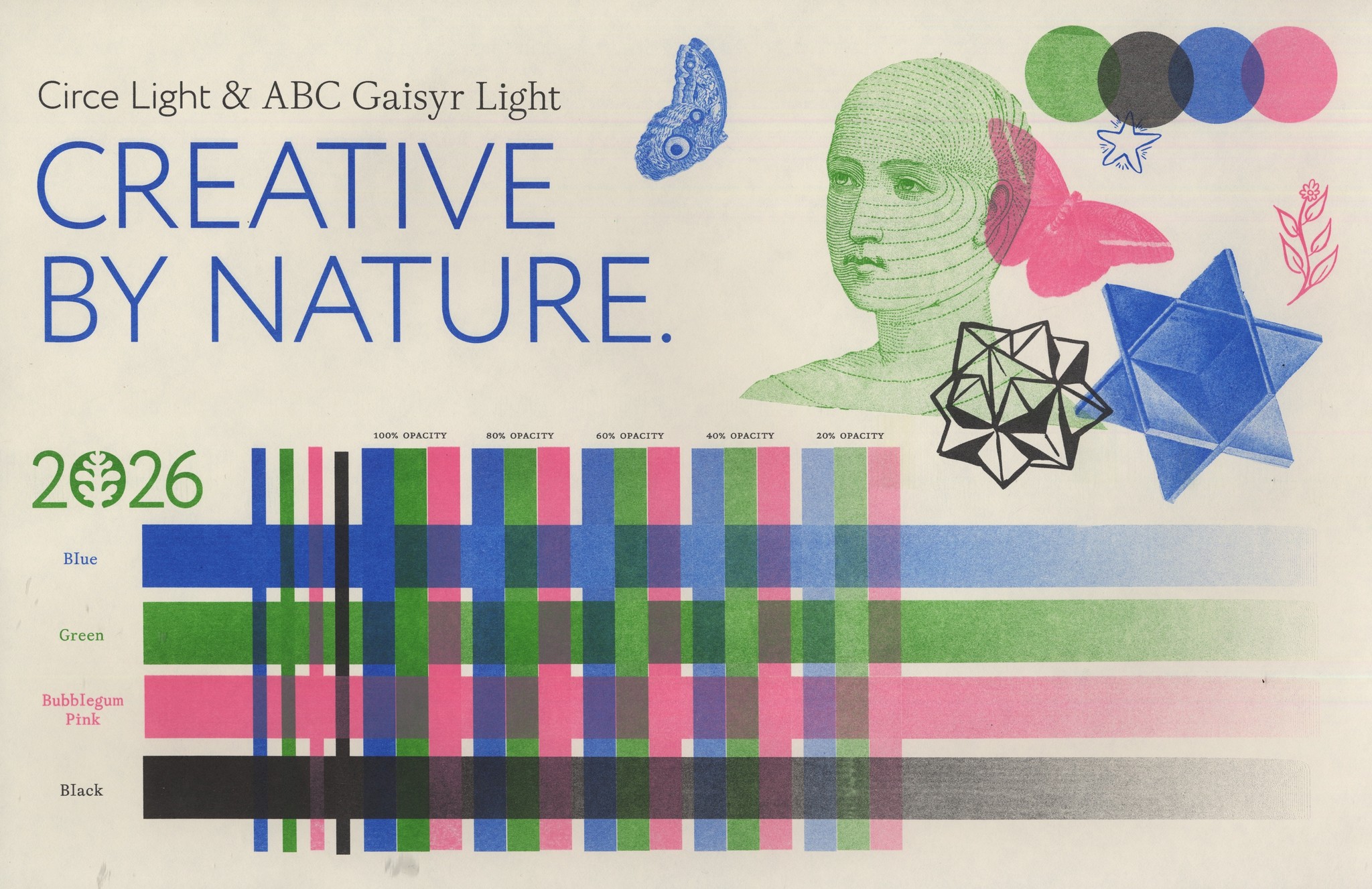
Testing selected colors, fonts, and imagery
Bumps in the Road
Our Collaboration Process Slowed Down
As the team began producing assets, we began to experience workflow bottlenecks.
We were working with multiple files and programs, and collaboration became fragmented, partly because designers varied in their knowledge and comfort level with the tools and partly because our tools did not support real-time collaboration. When only one person could work on a file at a time, our hand-offs got out of control and messy!
It felt like we were all working on our own mini ideas instead of contributing to the greater project.
Design Ops Solution
Adobe Express to the Rescue!
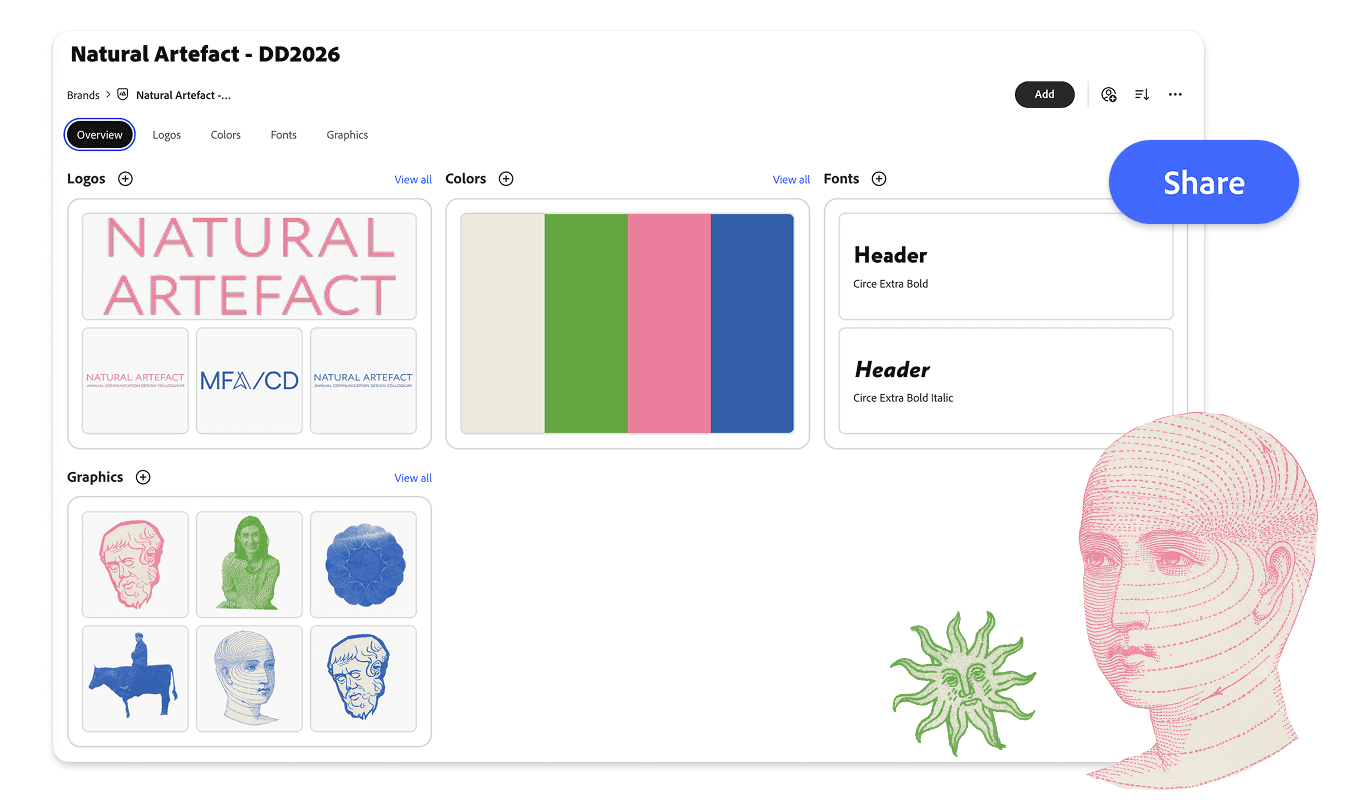
To address this problem, I introduced Adobe Express to our workflow and created shared brand guidelines with reusable assets, which allowed designers to quickly experiment and create variations while staying within the visual system.
Importantly, Adobe Express enabled real-time collaboration. Designers could work in the same file, build on each other’s ideas, and iterate asynchronously. No more messy hand-offs!
Another bonus: our faculty advisor could always access the latest file asynchronously in order to review and provide feedback.
Production Time
From Design to Reality
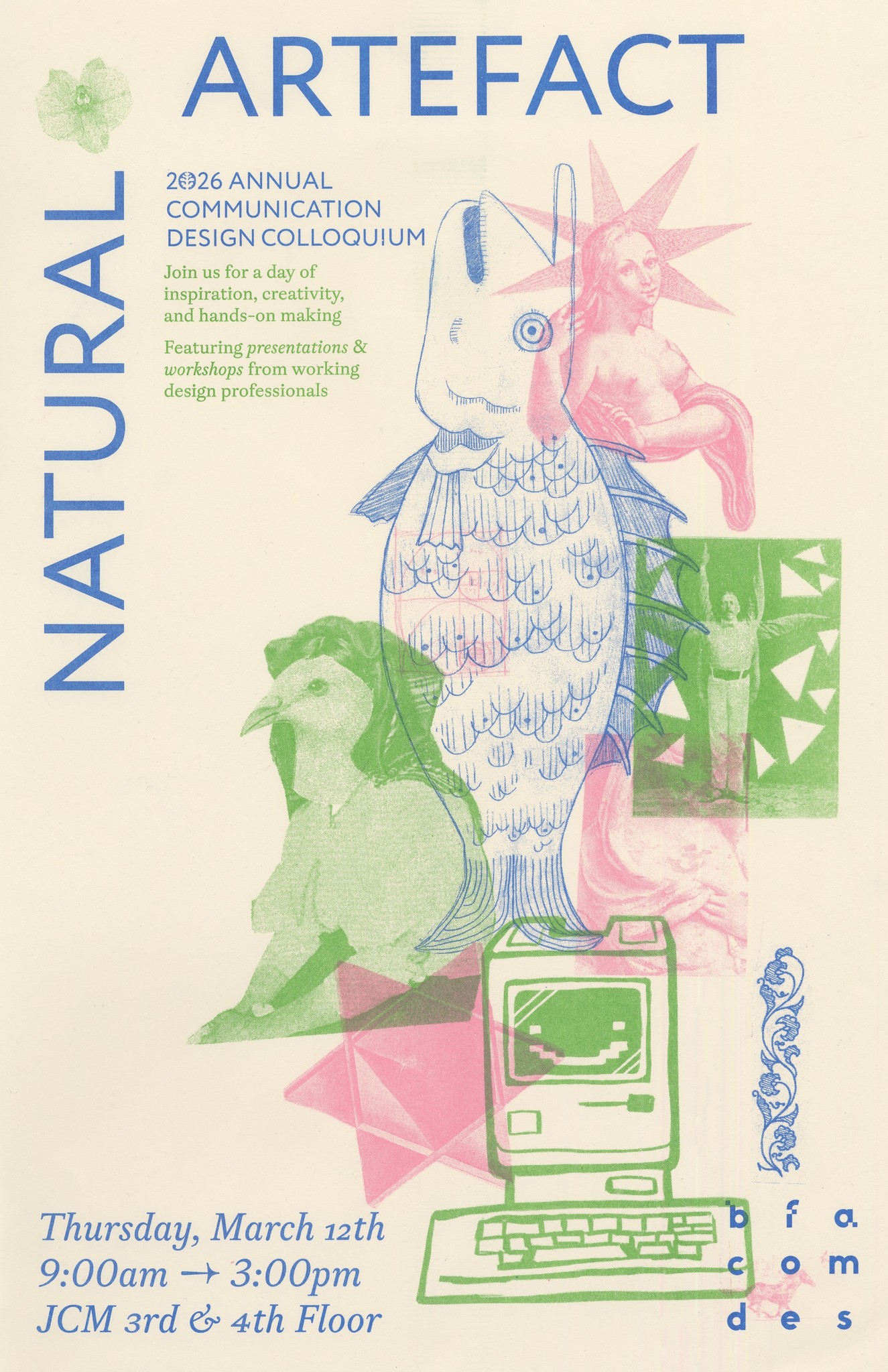
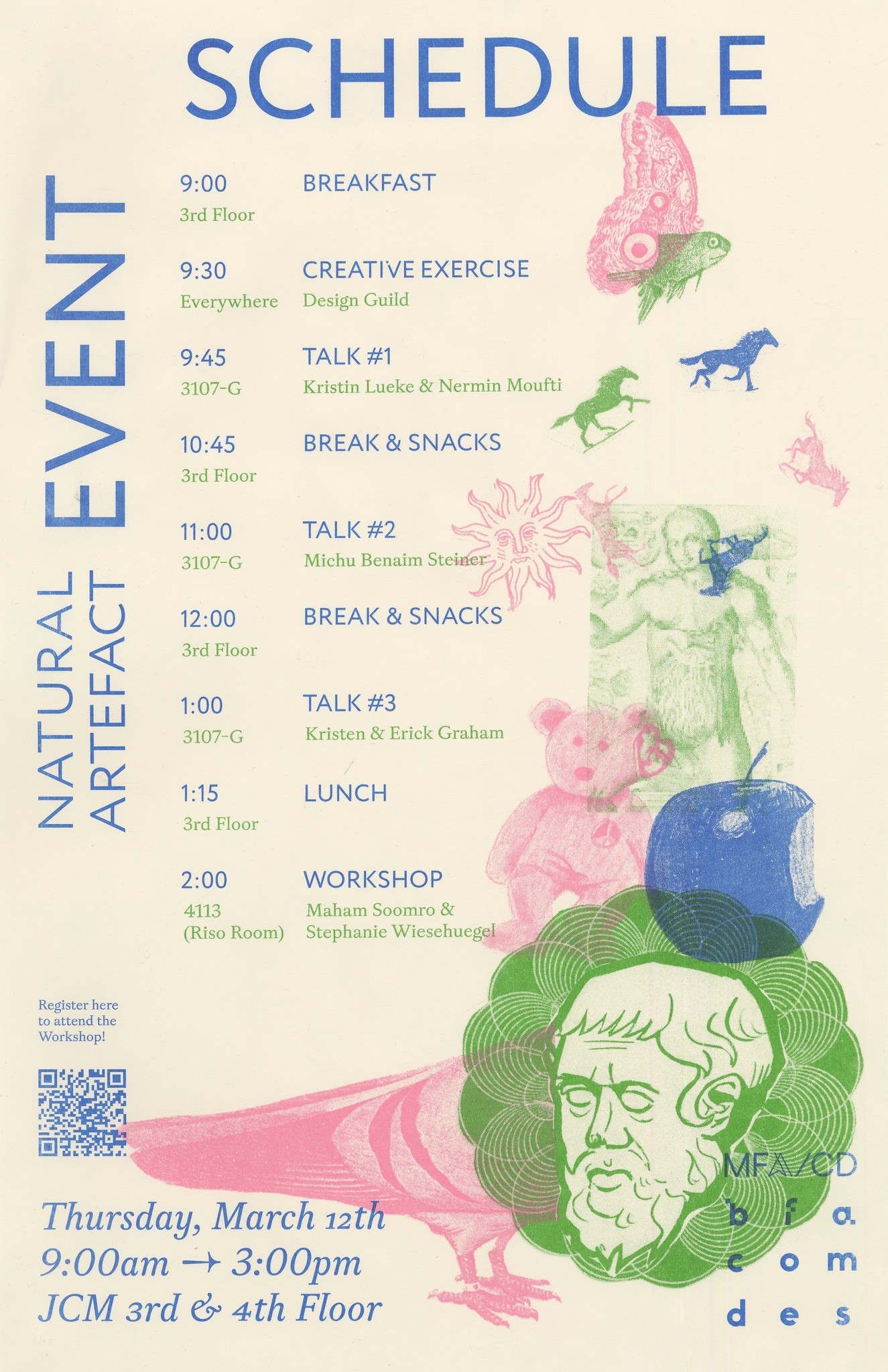
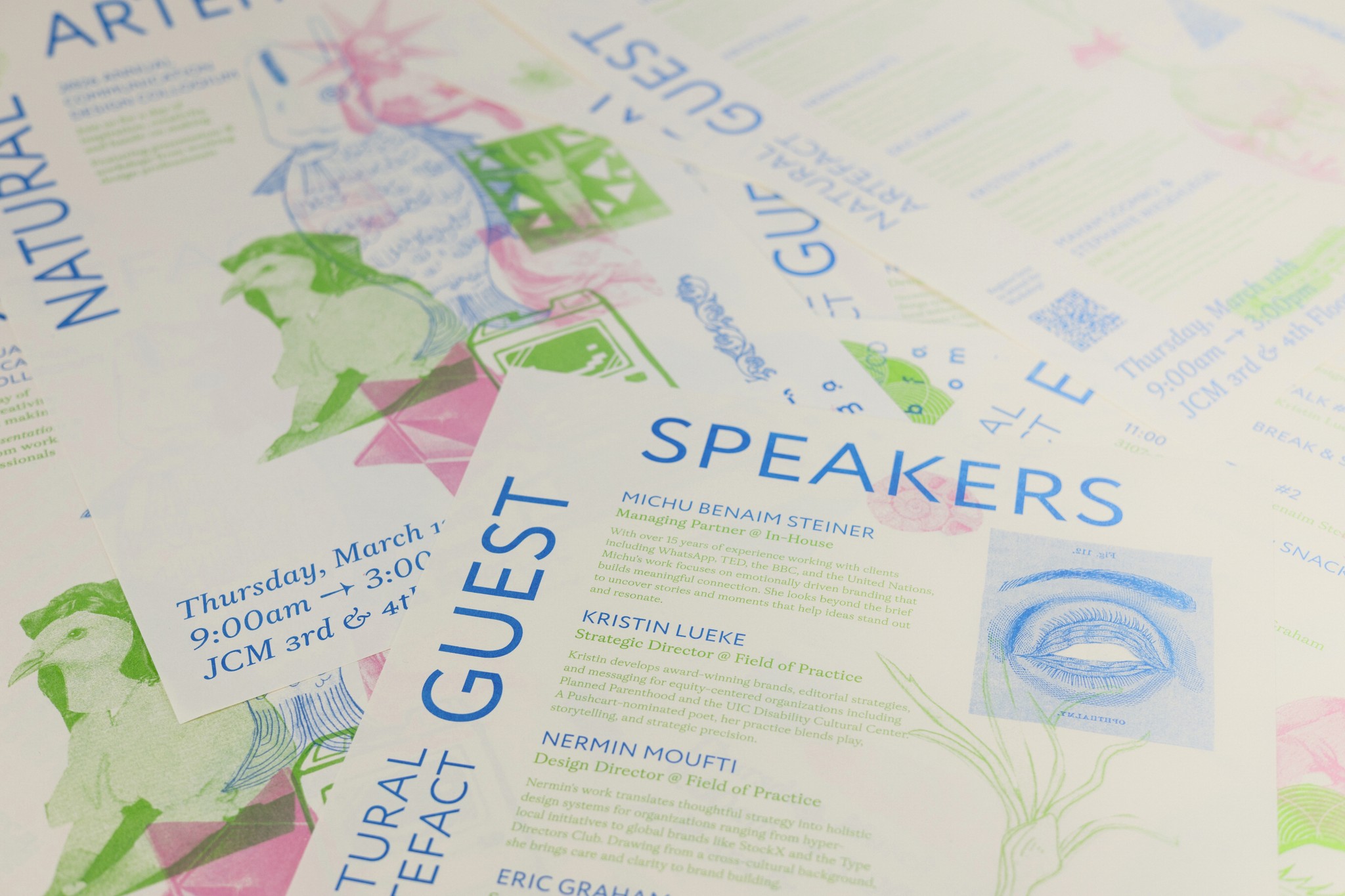
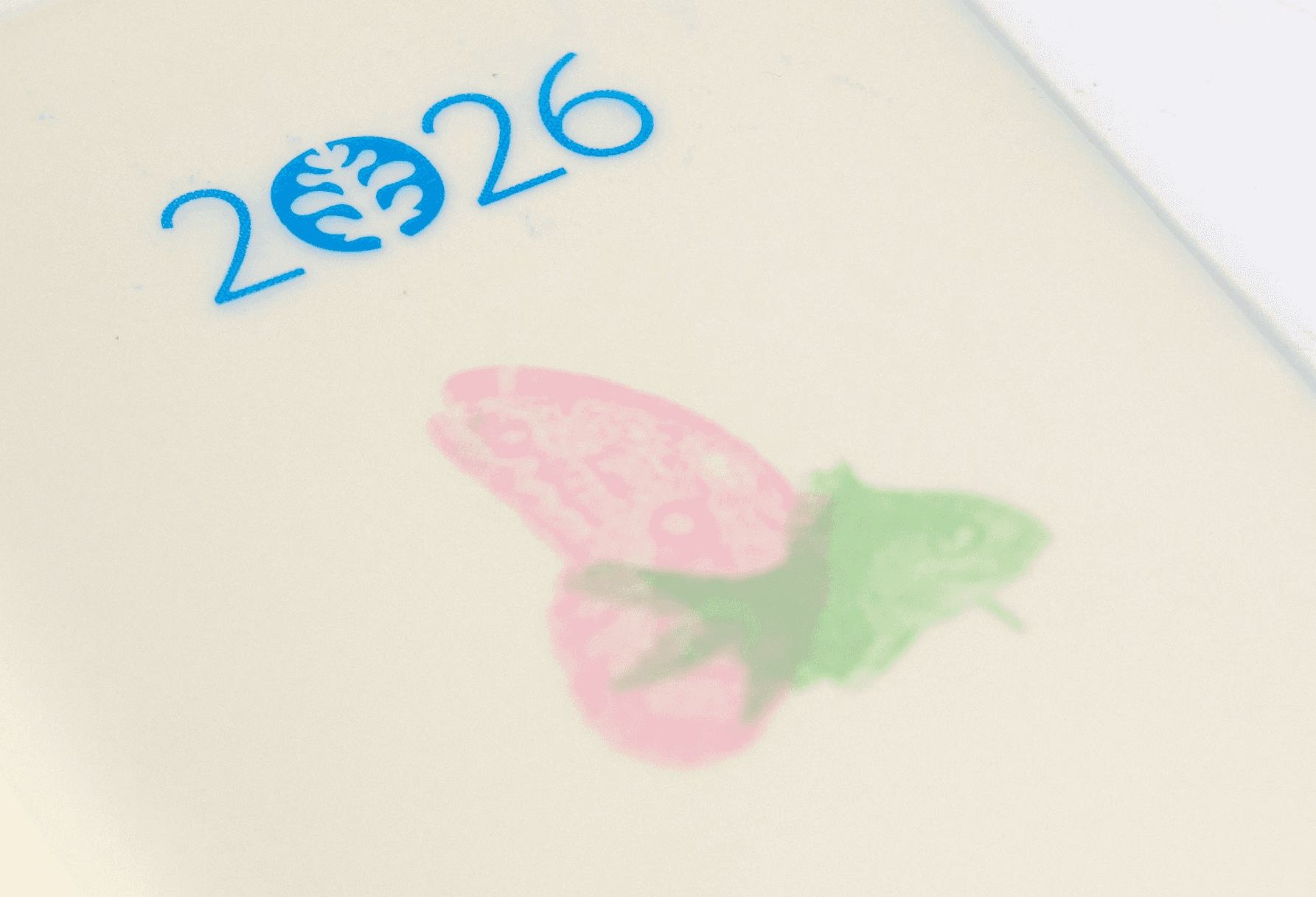
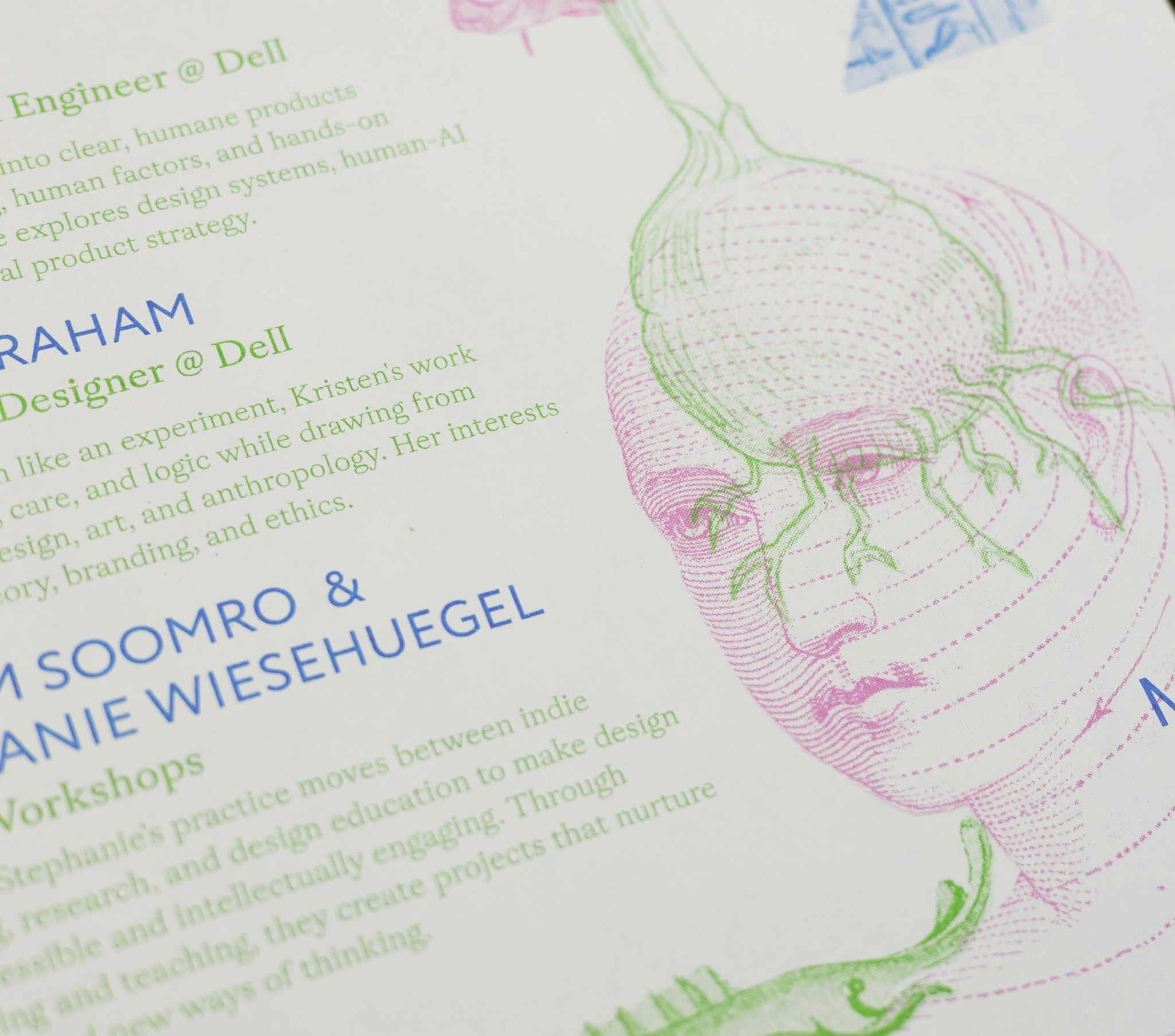
Once the designs were finalized, we moved into production. We chose to use Risograph printing because its layered textures, vibrant inks, and slight imperfections complemented our collage-inspired identity and reinforced the project’s handmade, archival feel.
80 copies of 3 different posters printed
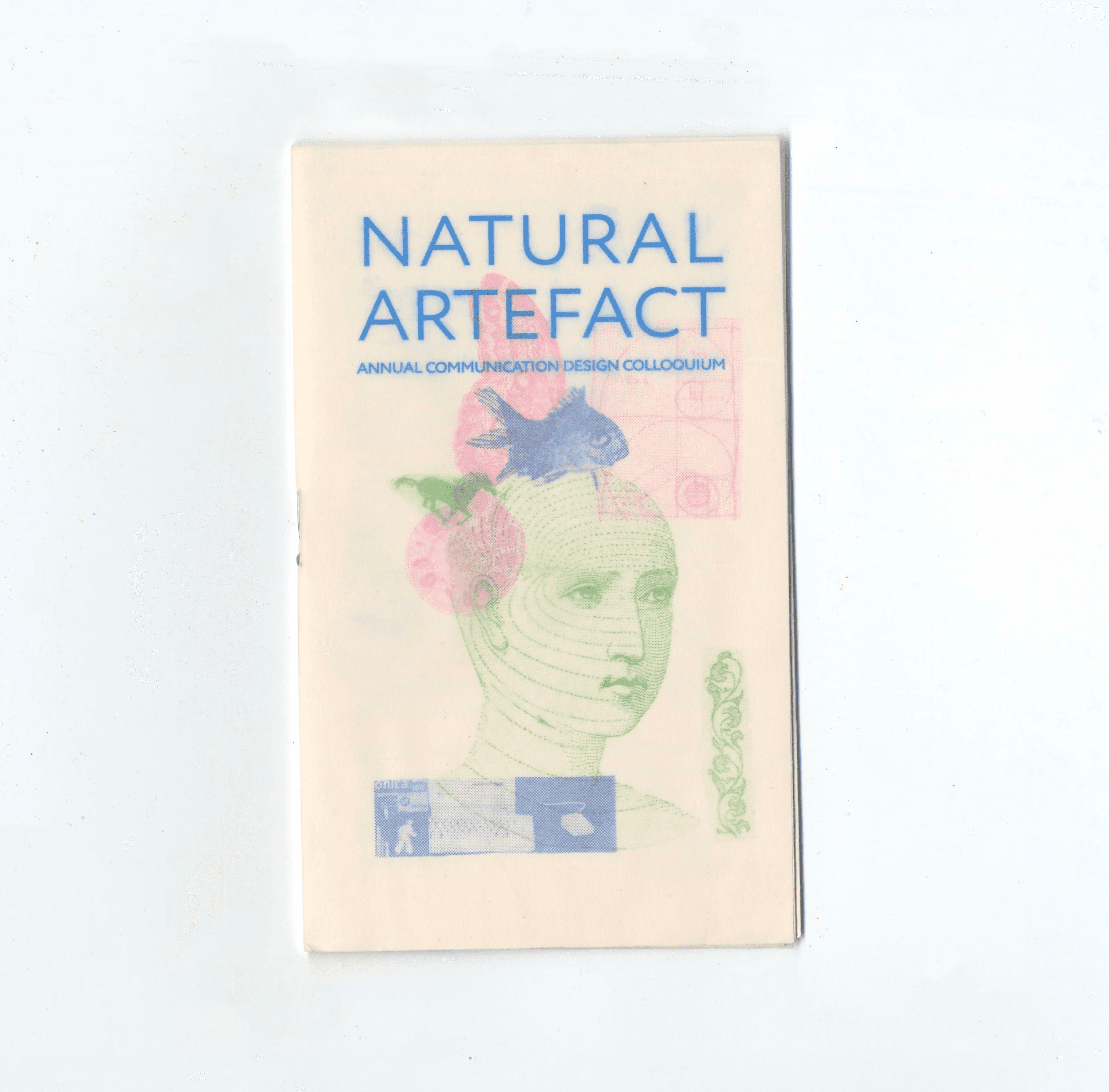
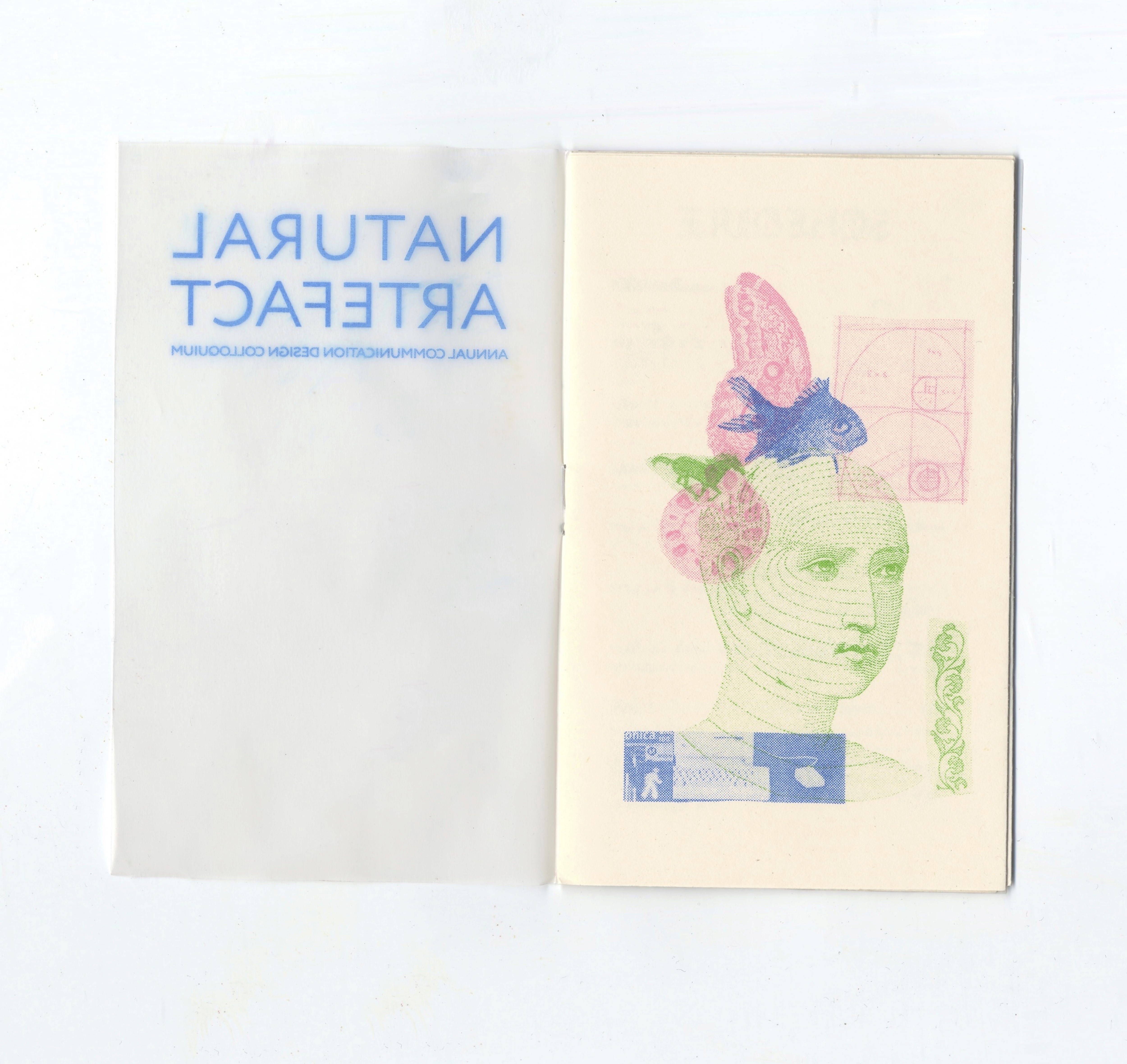
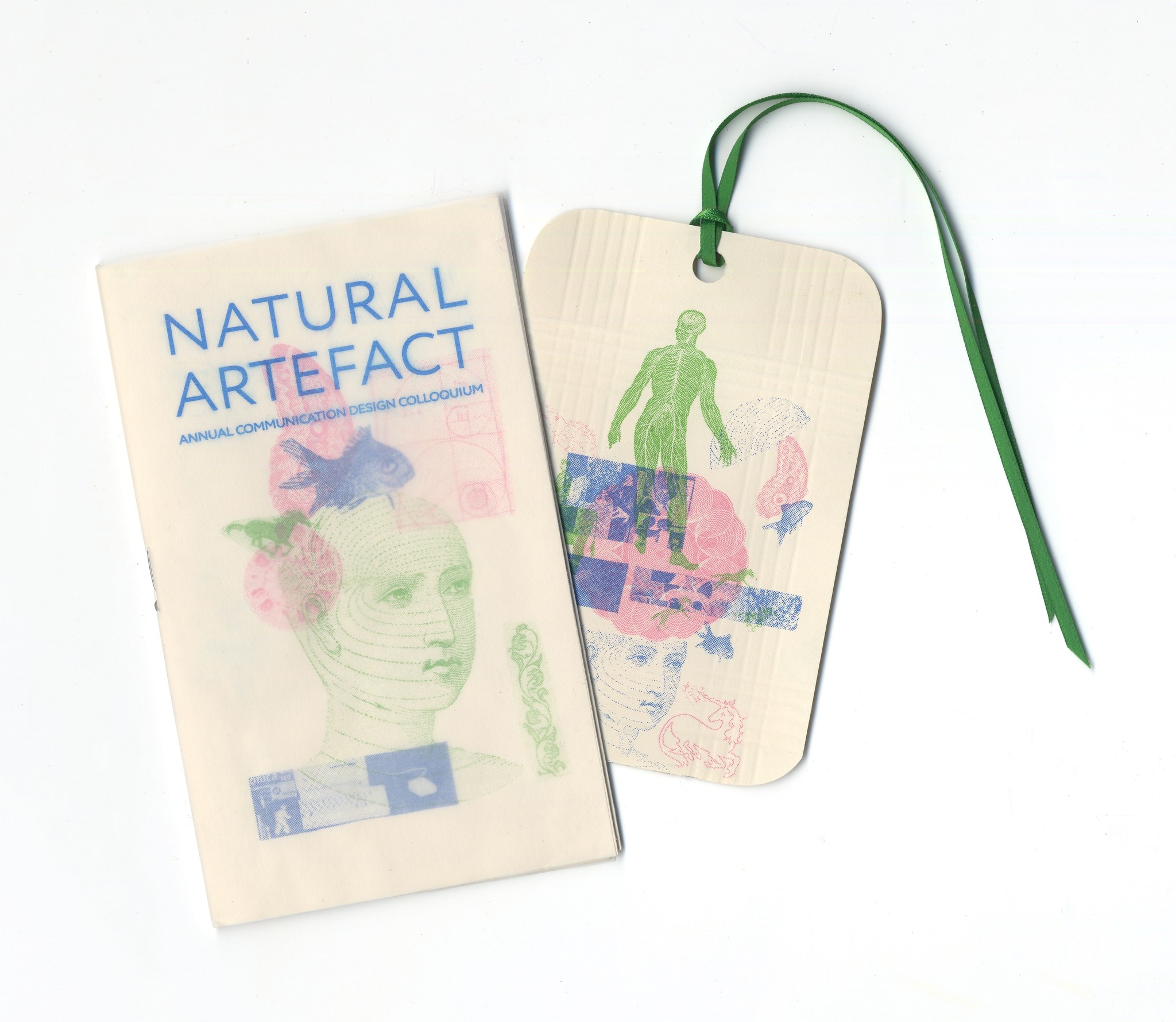
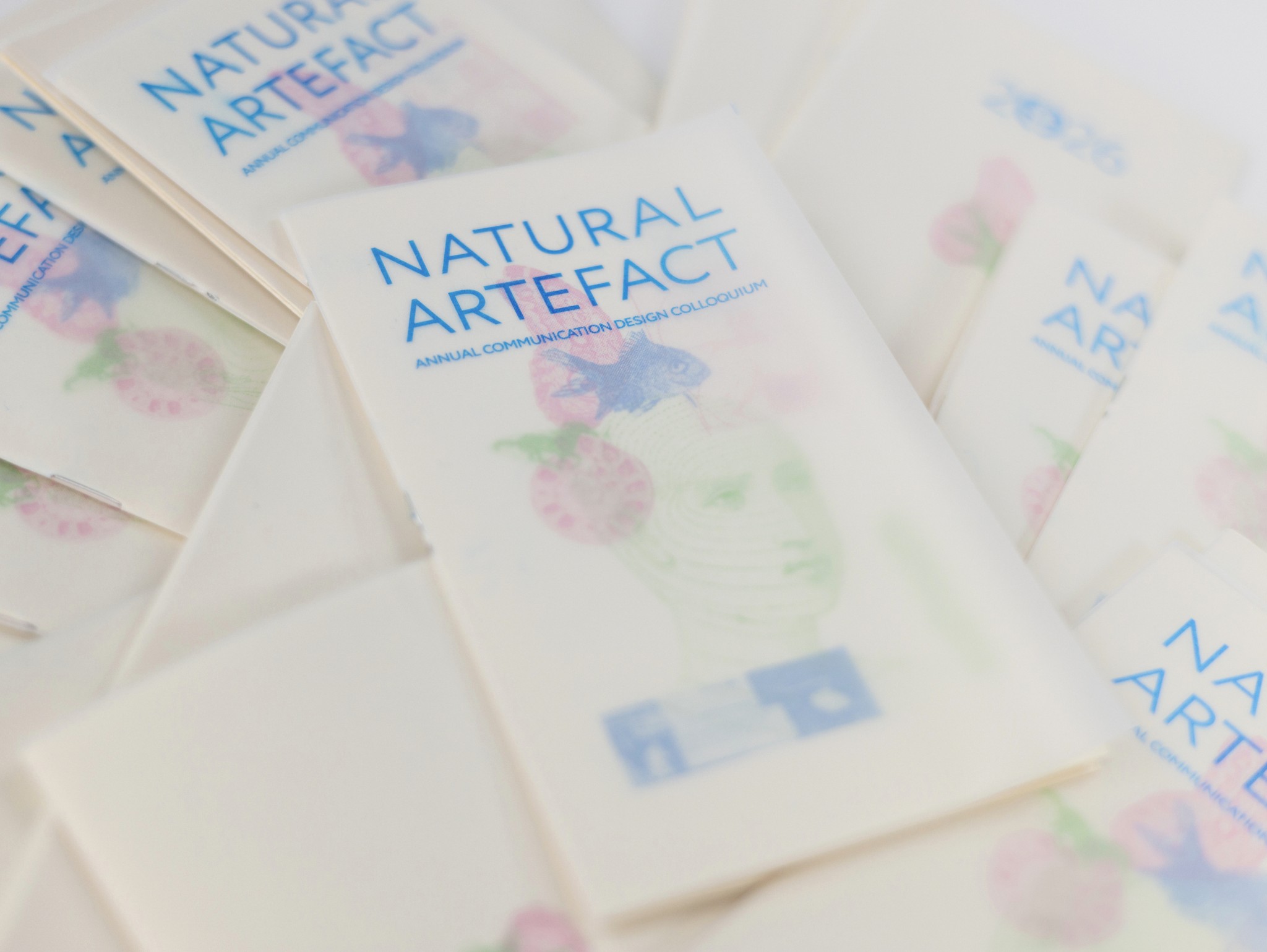
100 notebooks printed and assembled
It's Go Time!
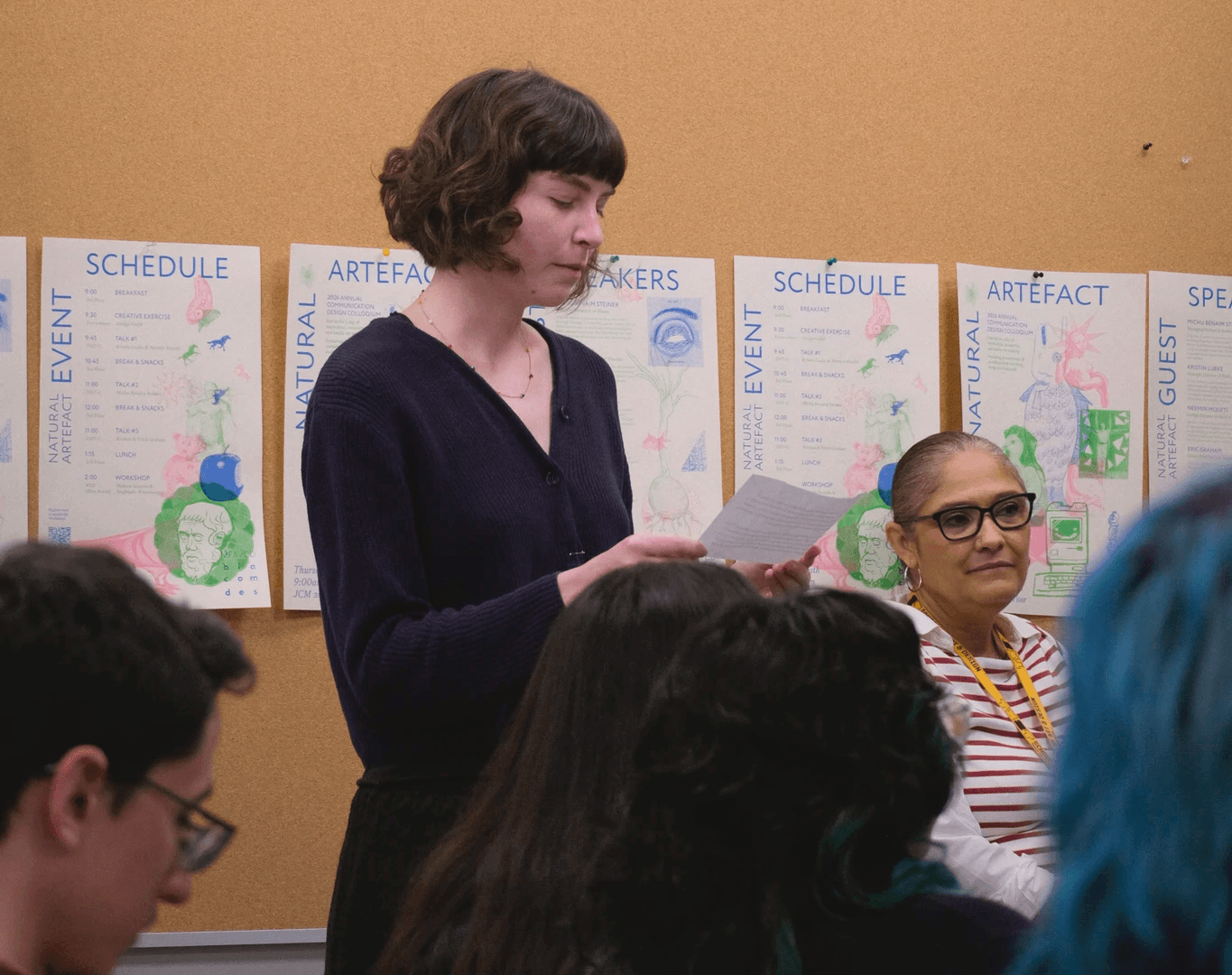
Natural Artefact In Action
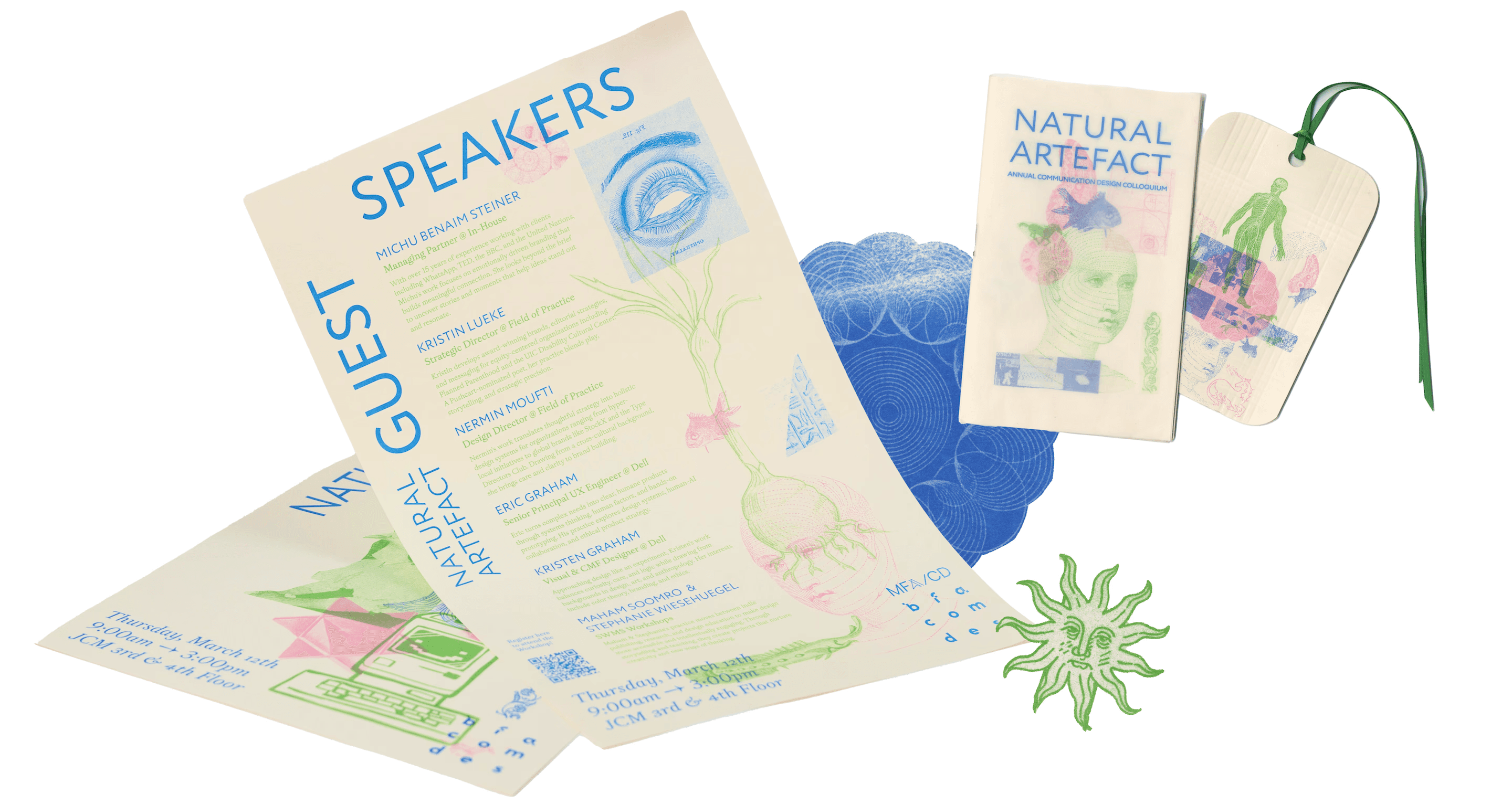
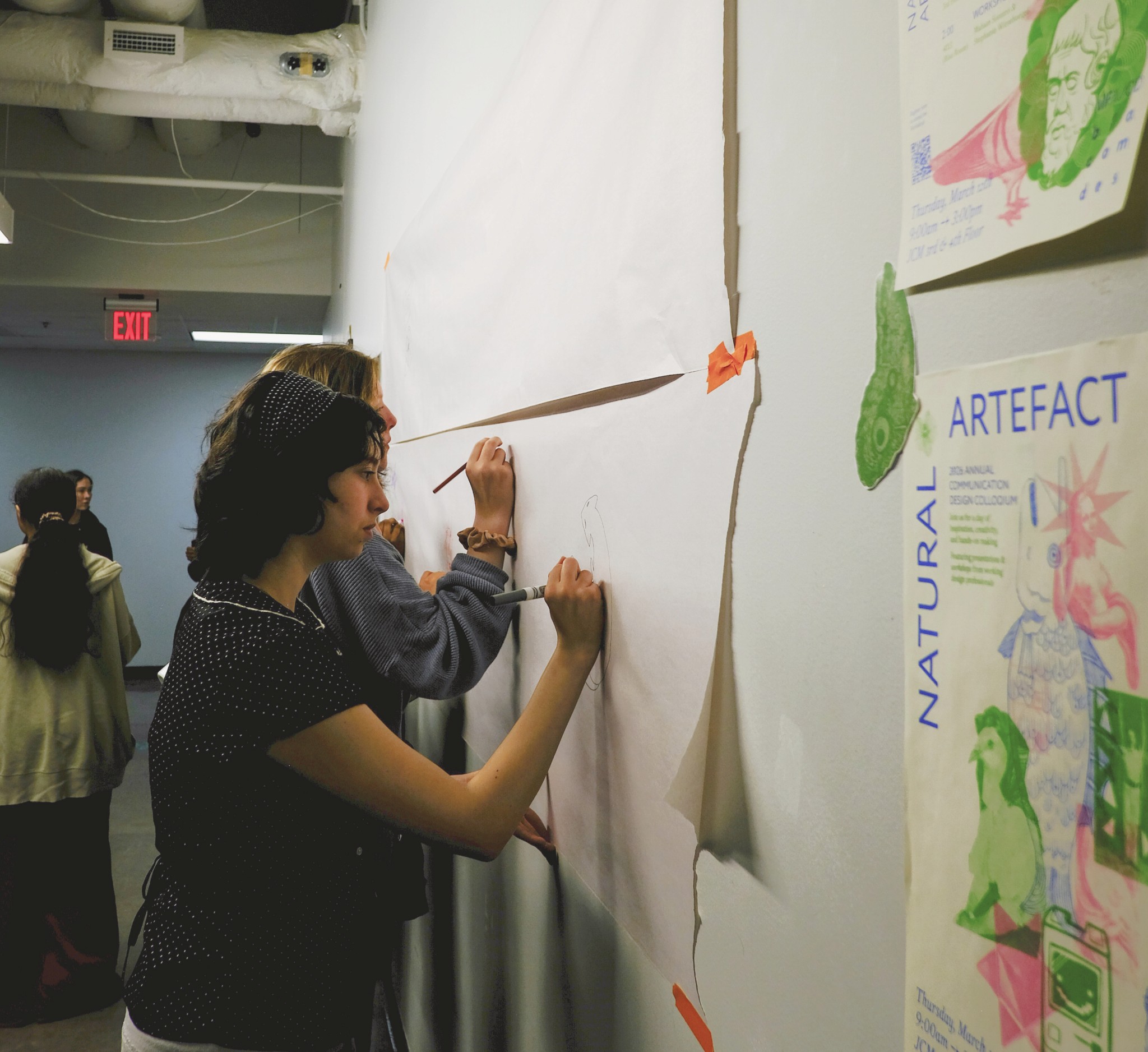
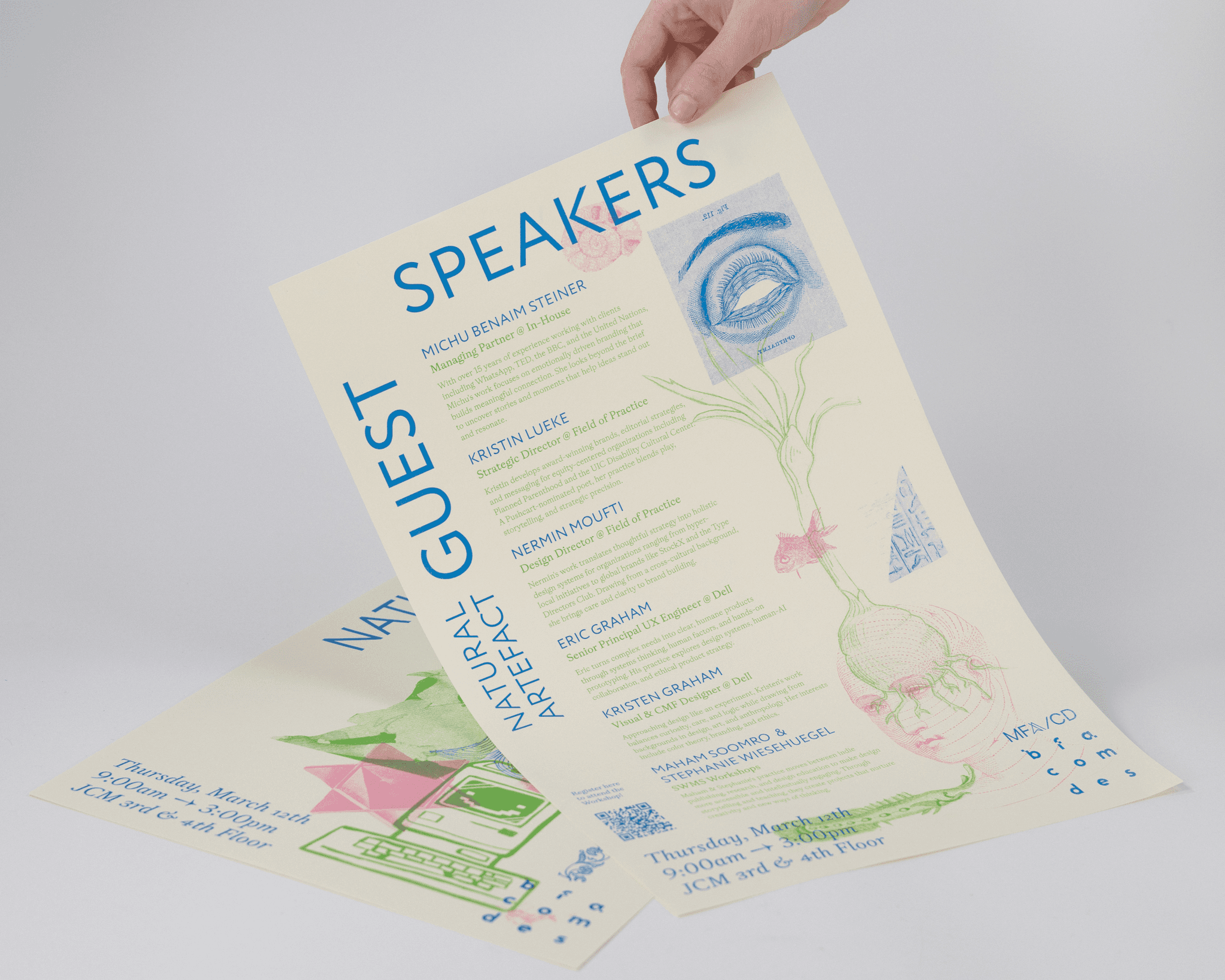
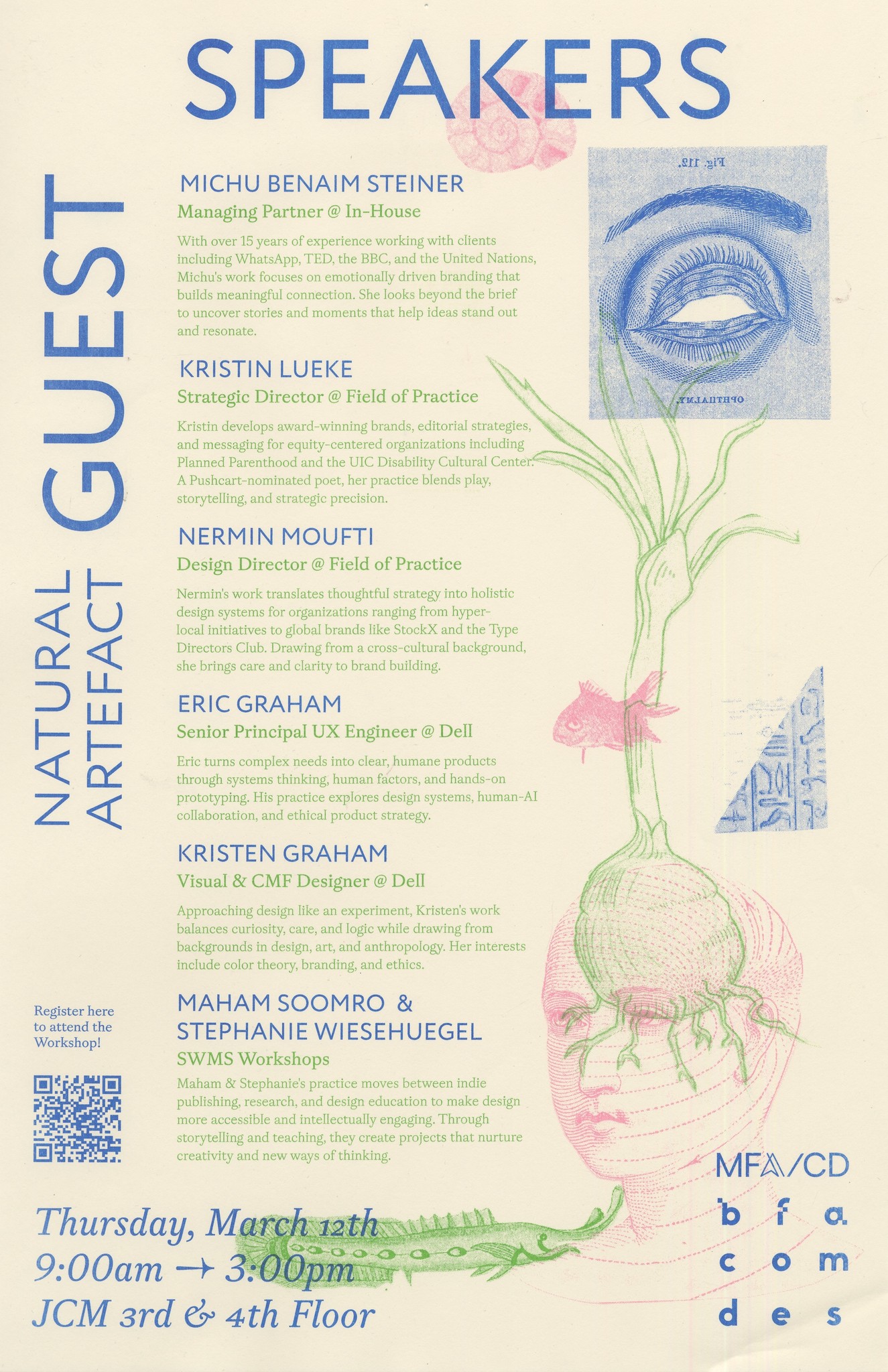
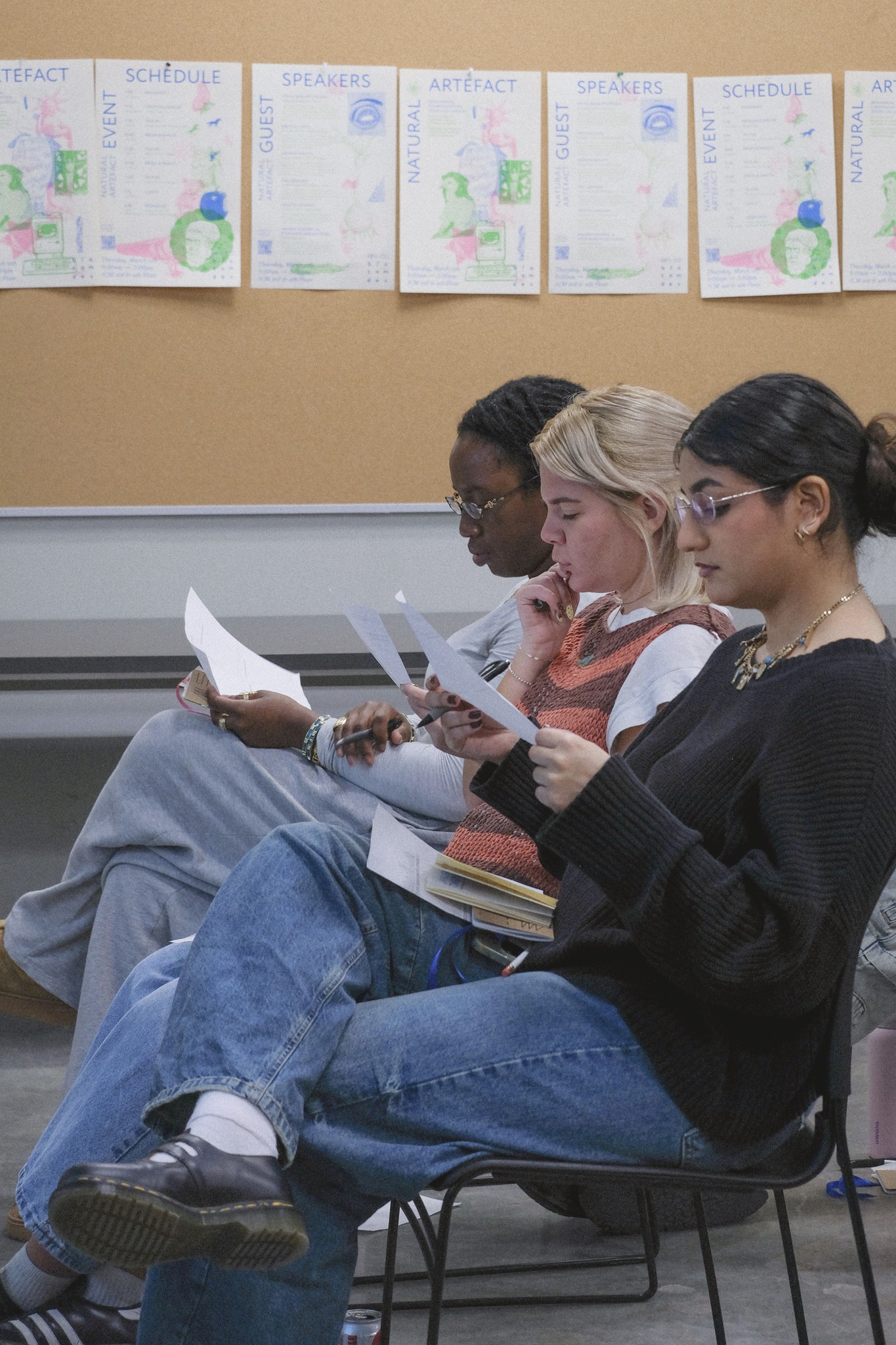
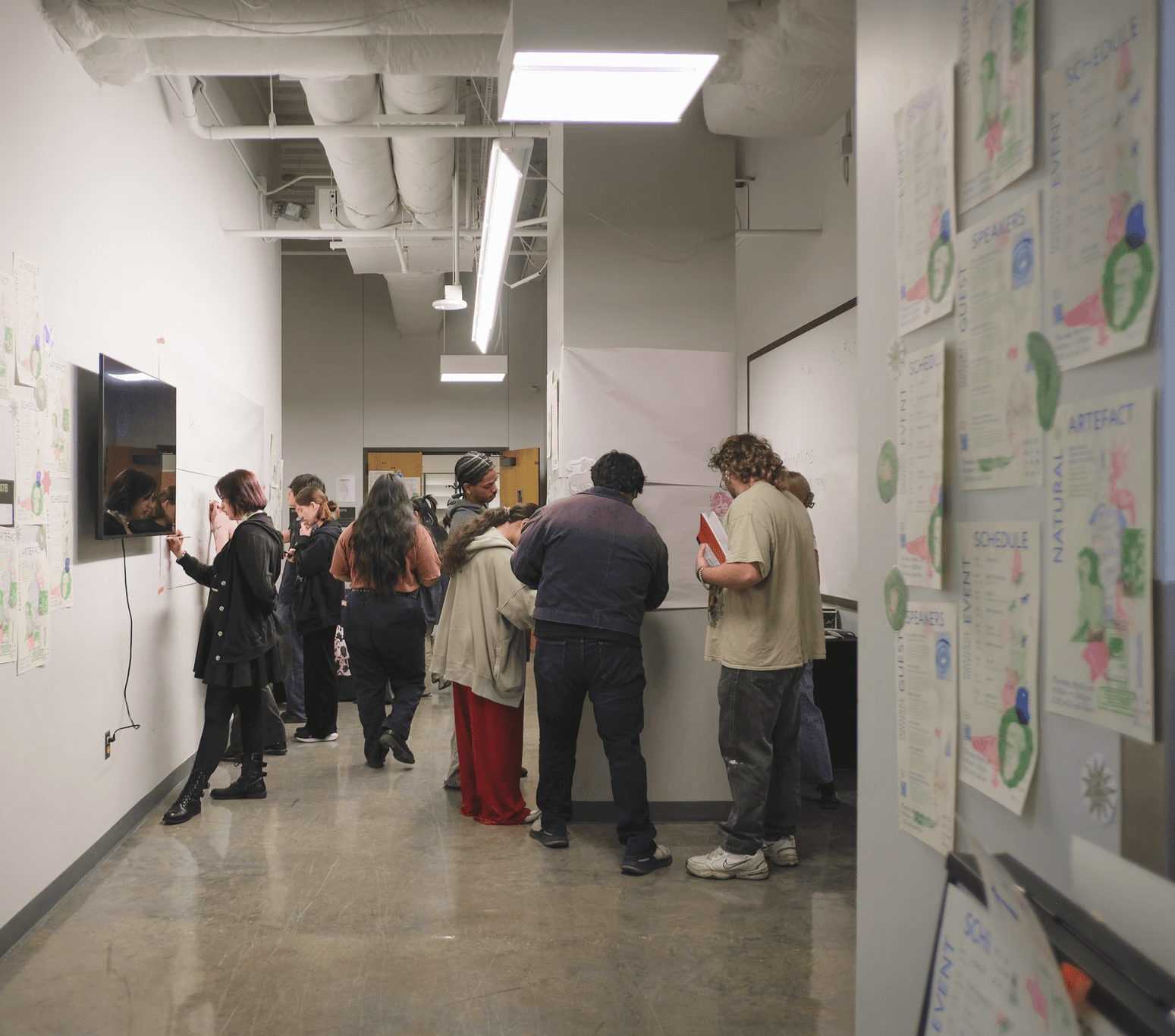
The final identity used collaged archival imagery, student illustrations, and structured typographic layouts inspired by museum catalogs and scientific journals.
Primary deliverables included:
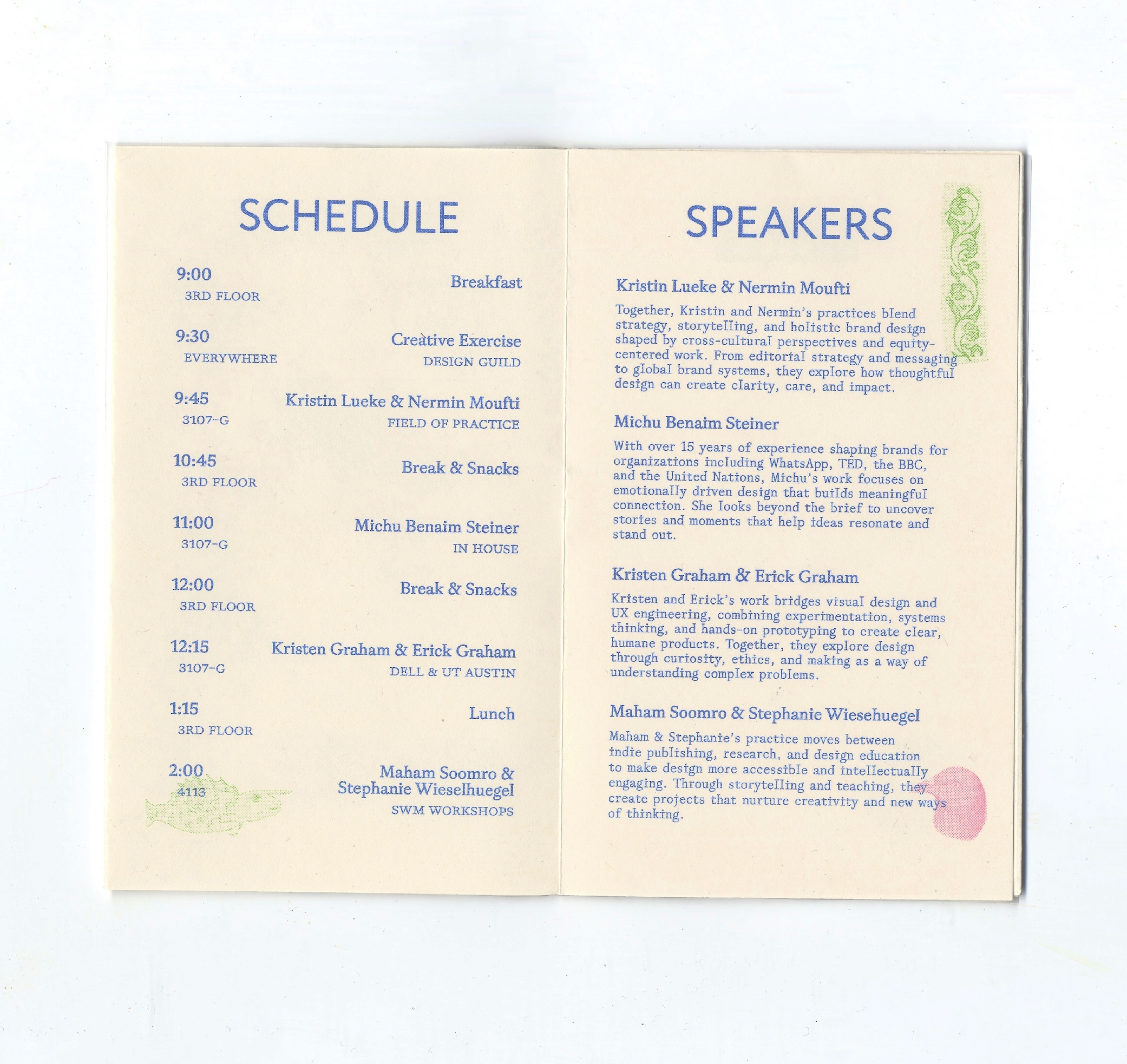
A poster triptych presenting event information, speakers, and schedule
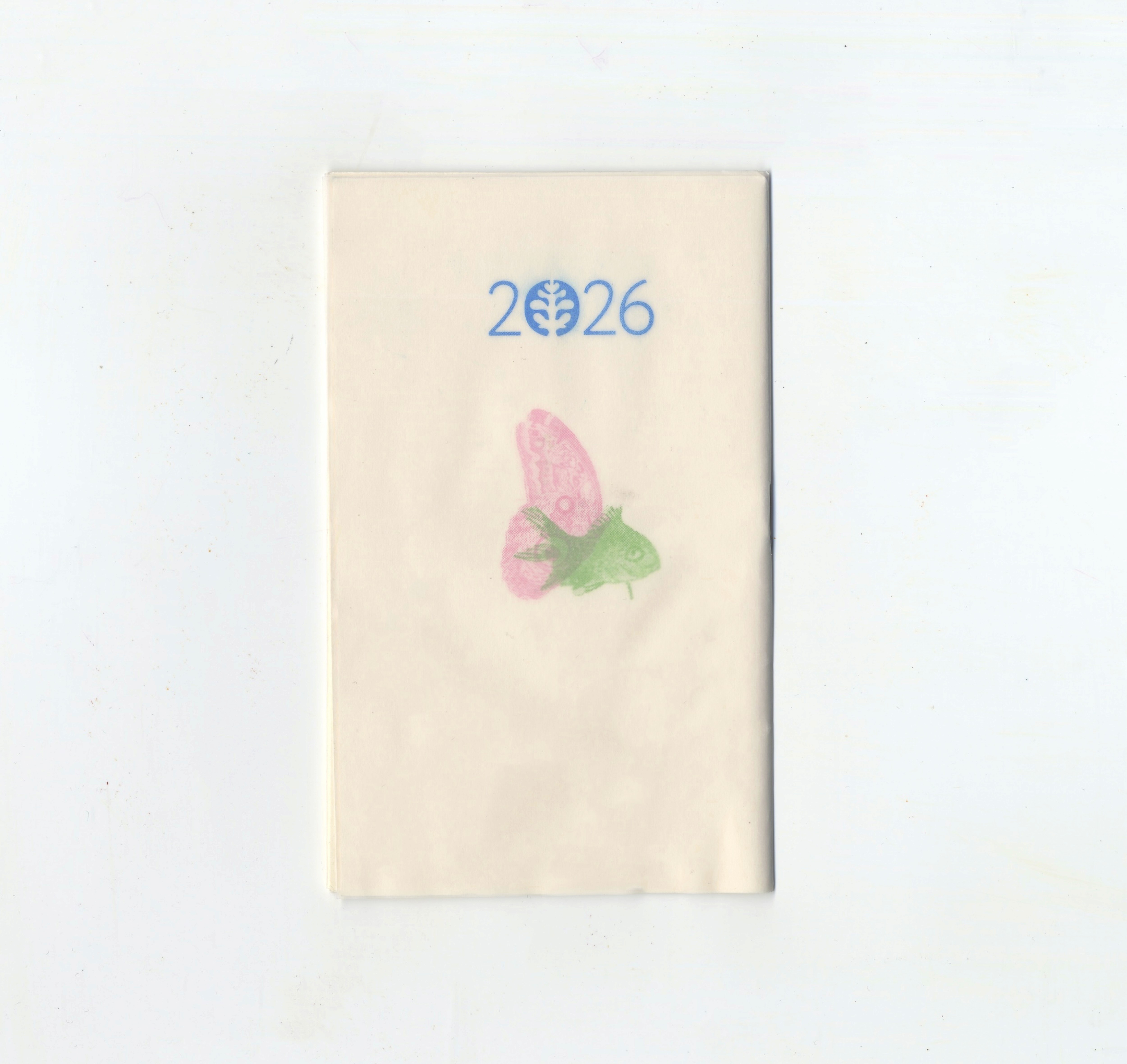
An 8-page attendee notebook with speaker information, space for notes, and a keepsake bookmark
Supporting visuals that could extend to social media and event signage
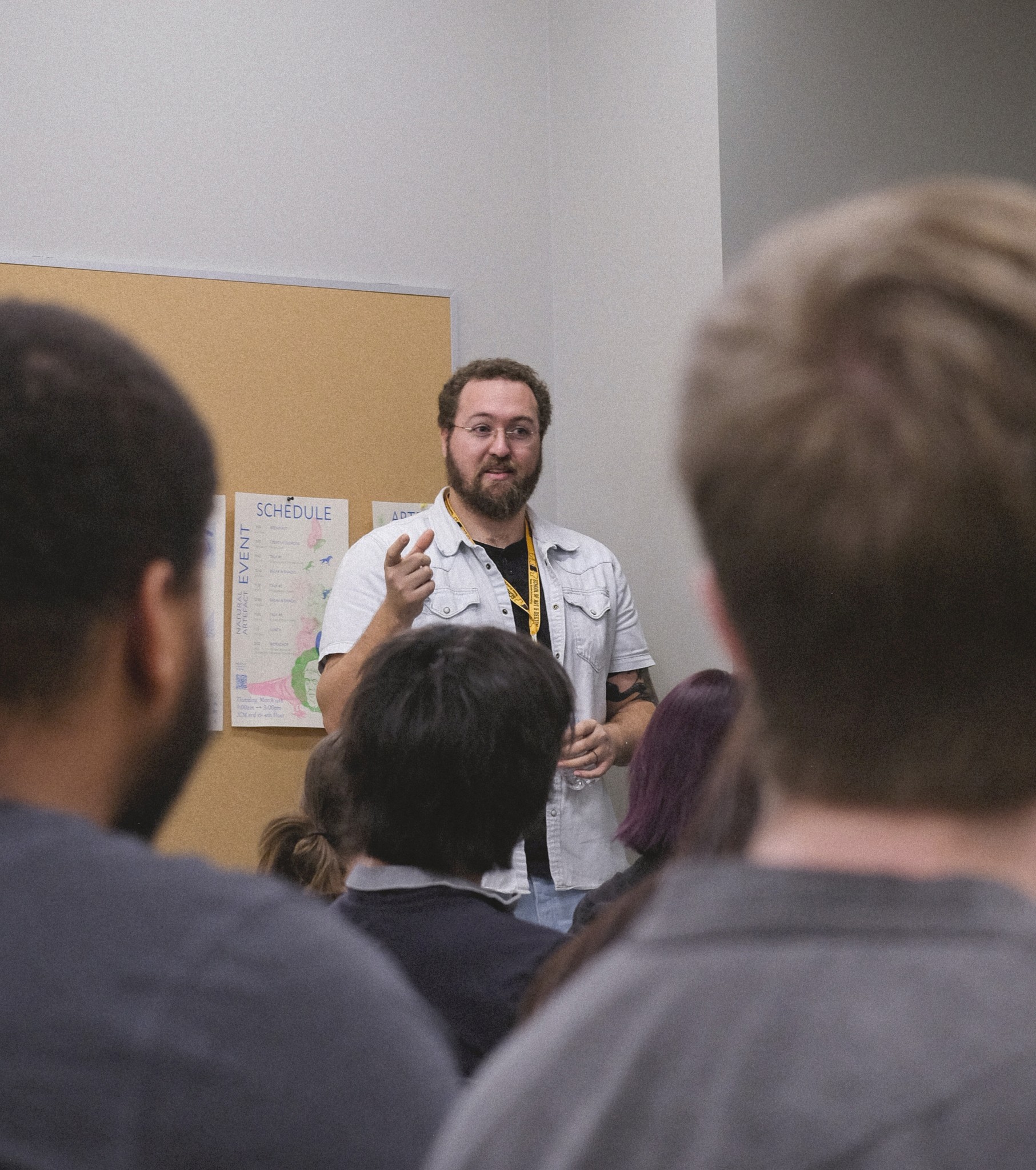
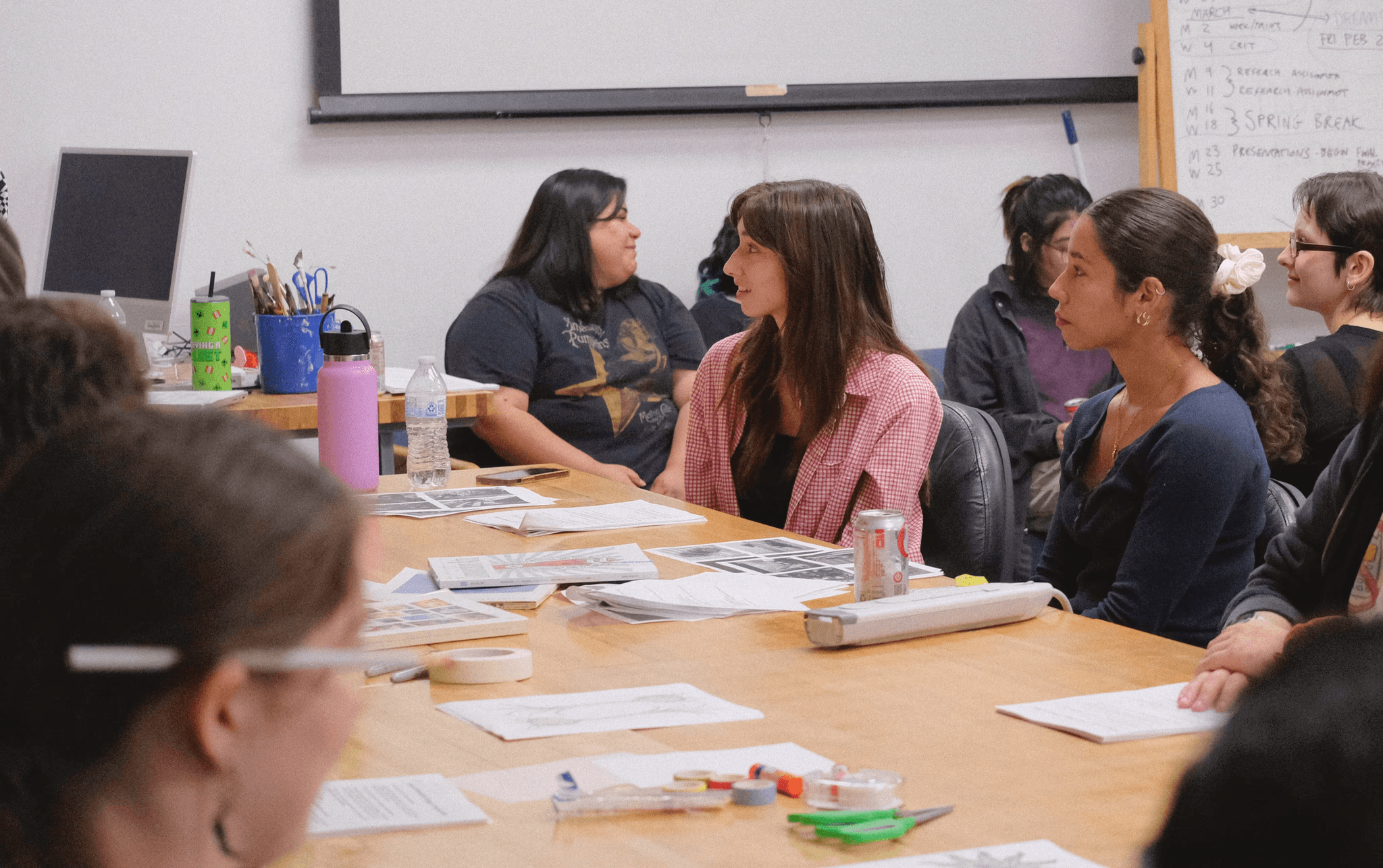
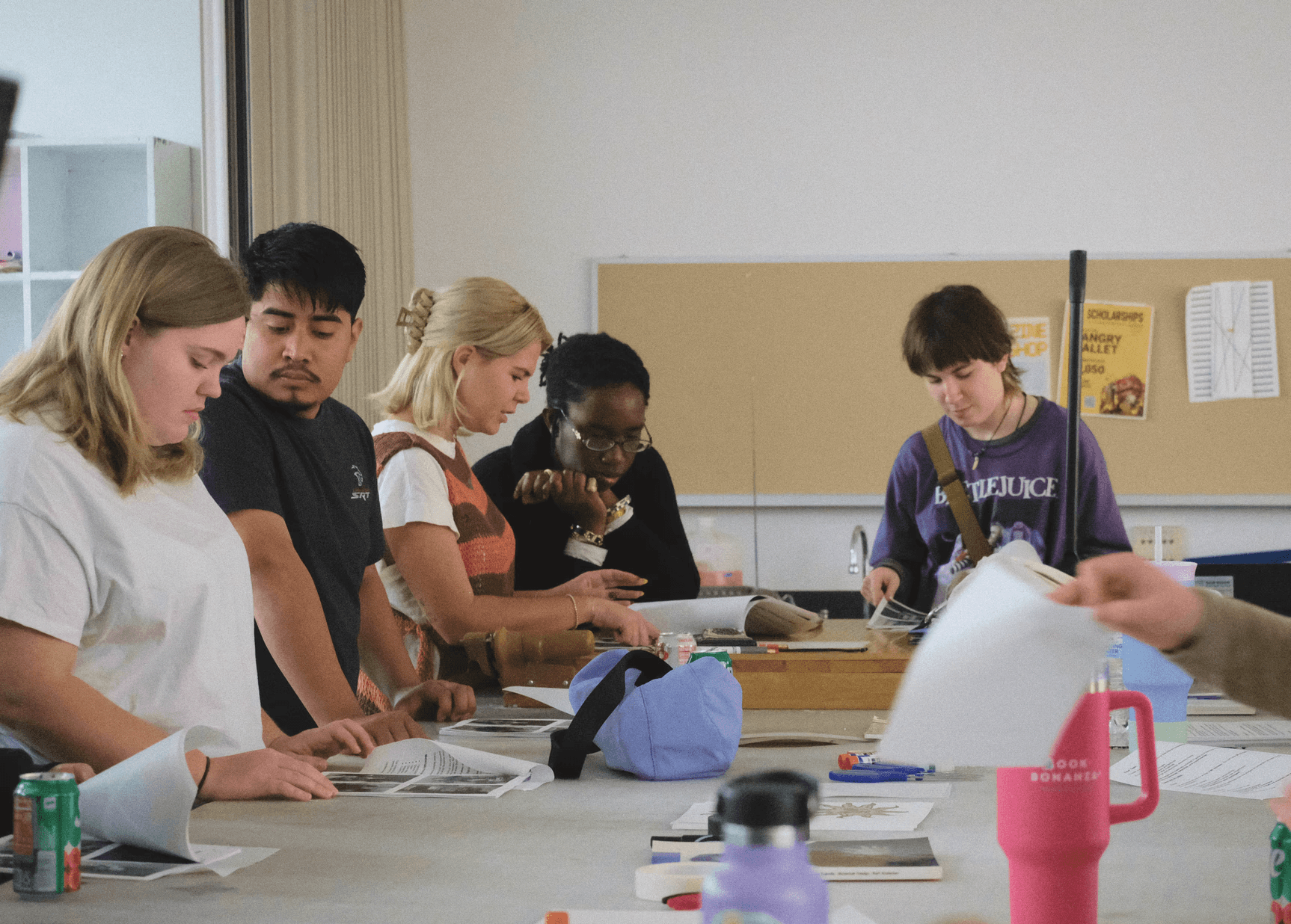
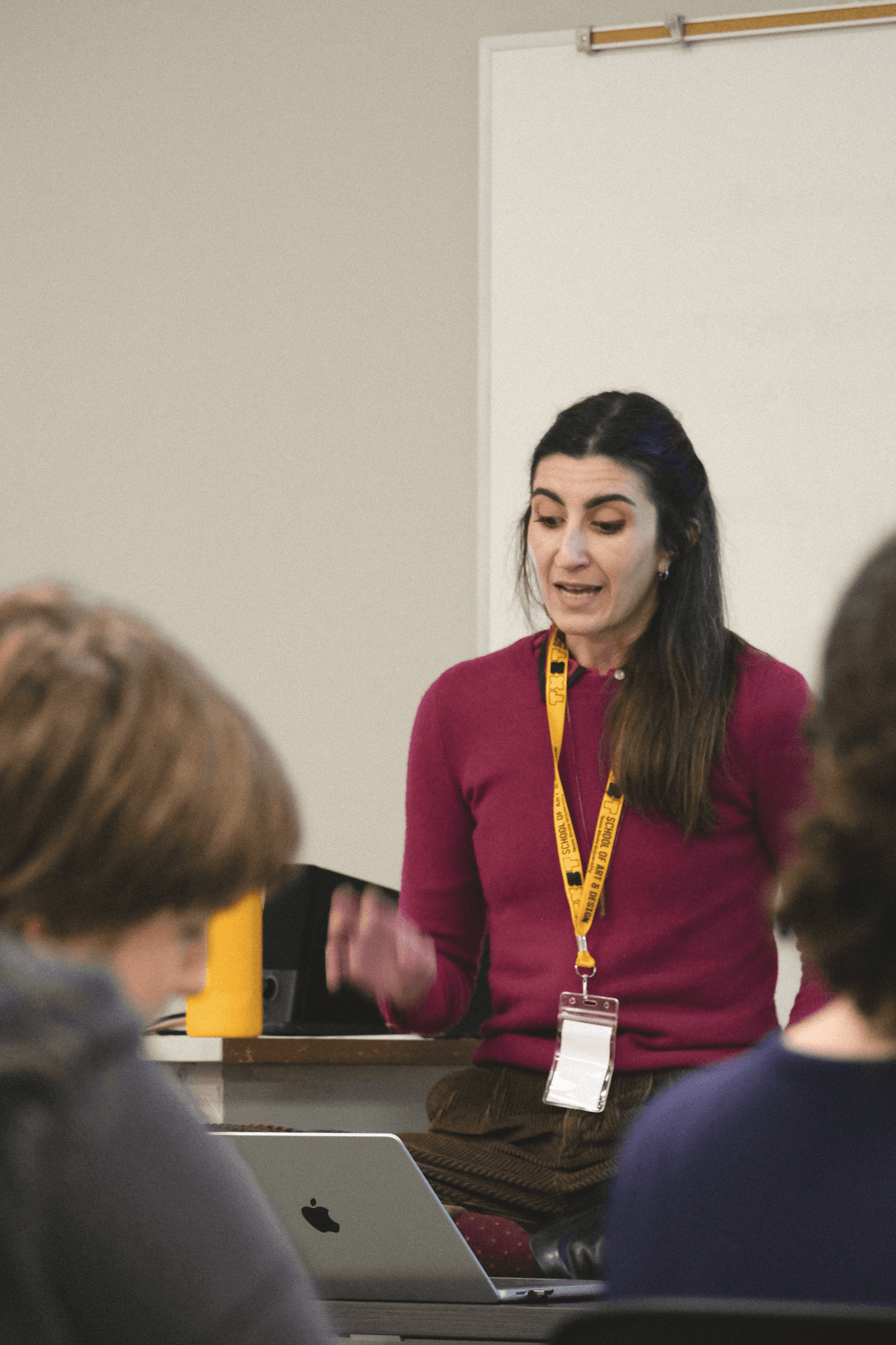
To see the full list of design credits click here. Event photography thanks to Addi Mae Walker.
Final Thoughts
This project taught me that strong design depends just as much on process as visuals. Leading a collaborative team meant learning how to create structure without limiting creativity, adapt workflows when our original process broke down, and build systems that helped contributors of different skill levels work confidently together.
I’m especially proud of introducing a more collaborative workflow using Adobe Express, which reduced bottlenecks and helped the project feel cohesive across contributors.
Most rewarding of all was seeing the identity come to life during the event itself and watching people interact with all the materials we created.